
Free tool for growers and PCAs
Know when to spray.
Answer 3 quick questions. We show you about when to spray for moths in your orchard, so you can talk to your PCA in time.
Start hereGrow rice? This tool is for orchards. Use our rice spray guide instead.
Which date do I use?
Use the first day you keep catching moths in your traps and it is 62°F or warmer at sunset.
Not sure? Ask your PCA (pest control adviser).
Checking the weather
All the dates for codling moth
Eggs start to hatch
No date yet · 200 heat units
Some sprays work best right around this time. Ask your PCA if yours is one of them.
Spray time if you use an insect growth regulator
No date yet · 250 heat units
An insect growth regulator stops young insects from growing up. If small nutlets are not out yet, wait until they are.
Spray time for other sprays
No date yet · 300 heat units
This is for the first moth flight. If small nutlets are not out yet, wait until they are.
Second moth flight starts (average)
No date yet · 1,060 heat units
It can come anywhere from 800 to 1,300. Watch your traps. When catches go up, start a new count from that day.
These numbers come from the UC guide for walnuts. For apples or pears, ask your PCA.
Use these dates to plan. Your traps, your PCA's written advice and the product label decide when and what to spray.
Show the chart and the details for PCAs
- Solid line: past weather. Dashed line: forecast. Dotted line: last year's weather.
- Total: 0 °F degree days from biofix, Sutter County (Live Oak).
- Model: 50°F lower threshold, 88°F upper threshold. Single sine, horizontal cutoff. Source: UC IPM.
- Weather: daily highs and lows from Open-Meteo for the town listed for each county.
Get a heads-up before spray time
Leave your name and a phone number or email. Our office will contact you when your spray time is close, so you can talk to your PCA and plan ahead.
Free for growers and PCAs
How it works
Heat tells you when.
Warm days make bugs grow
Moths and worms grow fast when it is warm. They almost stop when it is cold.
We count the heat
Every day adds heat units. A warm day adds more than a cool day. A day from 55°F to 75°F adds about 15 heat units for codling moth.
The count tells you when
The count starts when the first moths or eggs show up in your traps. At a set number, eggs hatch and it is time to spray.
Details for PCAs: the UC IPM models
| Pest | Thresholds | Method | Degree days after biofix |
|---|---|---|---|
| Codling moth | 50°F to 88°F | Single sine, horizontal cutoff | 200: eggs start to hatch; 250: spray time if you use an insect growth regulator; 300: spray time for other sprays; 1,060: second moth flight starts (average) |
| Navel orangeworm | 55°F to 93.9°F | Double triangle, vertical cutoff | 100: first eggs hatch; 1,093: next moth flight (on old nuts) |
| Peach twig borer | 50°F to 88°F | Single sine, horizontal cutoff | 300 to 400: spray time if you use an insect growth regulator; 400: spray time for other sprays |
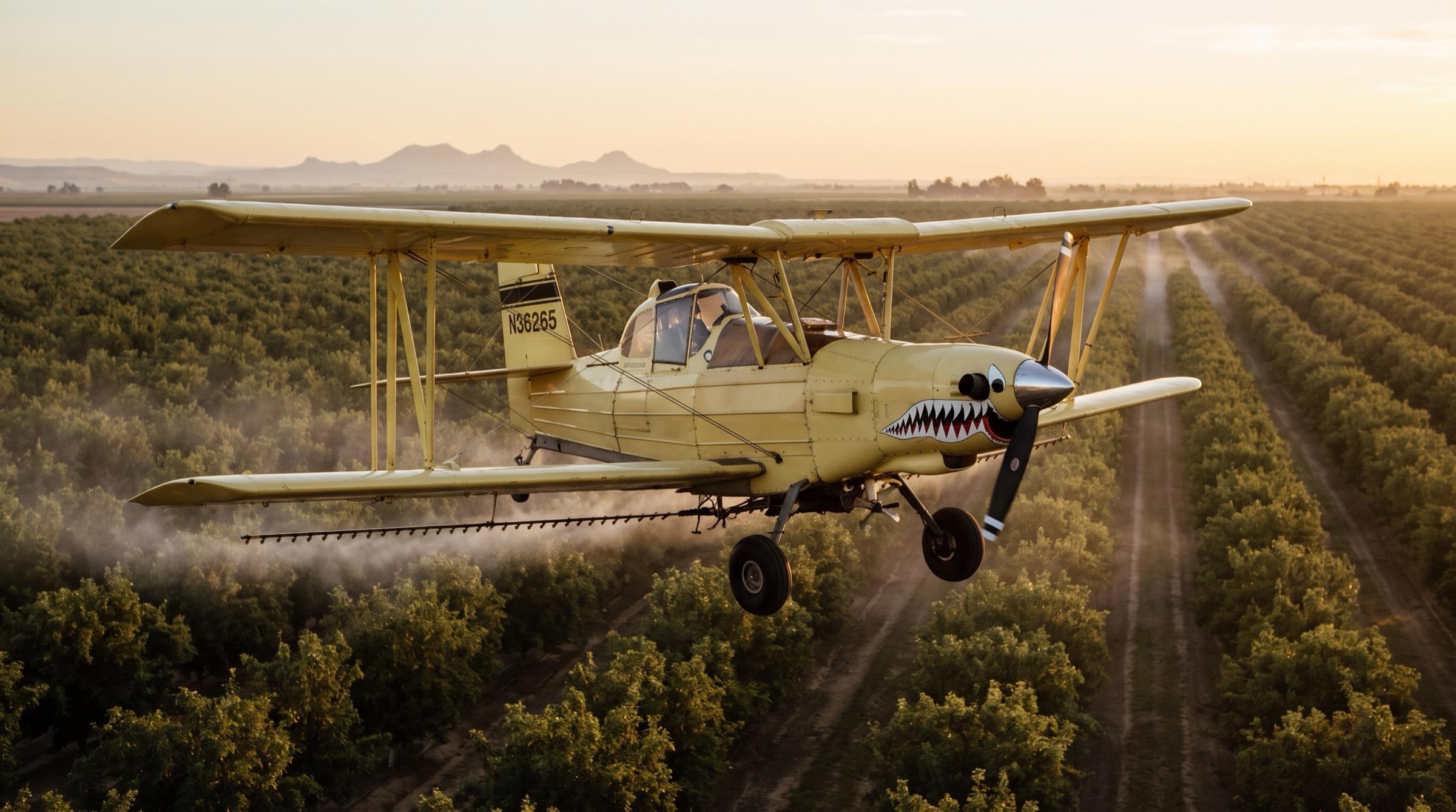
Want to learn more? Read about codling moth, navel orangeworm, peach twig borer and degree days. When your date comes, we spray orchards by air across the northern Sacramento Valley.
Questions
Common questions.
A heat unit is a way to measure warm weather over time. Experts call it a degree day. Each pest needs a set number of heat units to grow from one stage to the next. That is why the weather can tell you when eggs will hatch.
The start date is the day the count begins. It comes from your traps. Each pest has its own rule, and the tool shows you the rule. PCAs call this date the biofix.
Ask your PCA (pest control adviser) for the date. The count needs a real start date from traps near your orchard. Without one, the dates on this page are only an example.
We use the daily high and low for one farm town in each county. The weather comes from Open-Meteo. Past days use weather records. The next 16 days use the forecast. After that, we use last year's weather to make a rough guess. Your orchard may be a little warmer or cooler.
Use the date to plan. Your traps, your PCA's written advice and the product label decide when and what to spray. Talk to your PCA early. Once you have the recommendation, we can get you on the schedule.
No. Hull split depends on your trees, so check them in the orchard. The tool counts heat units for pests only.
Yes. The tool is free for growers and PCAs. Sutter Butte Dusters flies crop dusting jobs from Live Oak across the northern Sacramento Valley.

Your date is coming.
Talk to your PCA early, then call us at (530) 695-2294, Mon–Fri, 8am–3pm. PCAs can send the recommendation to us directly.