
Pest management
UC IPM: how growers and PCAs use it for pest timing
By the Sutter Butte Dusters team · · 7 min read
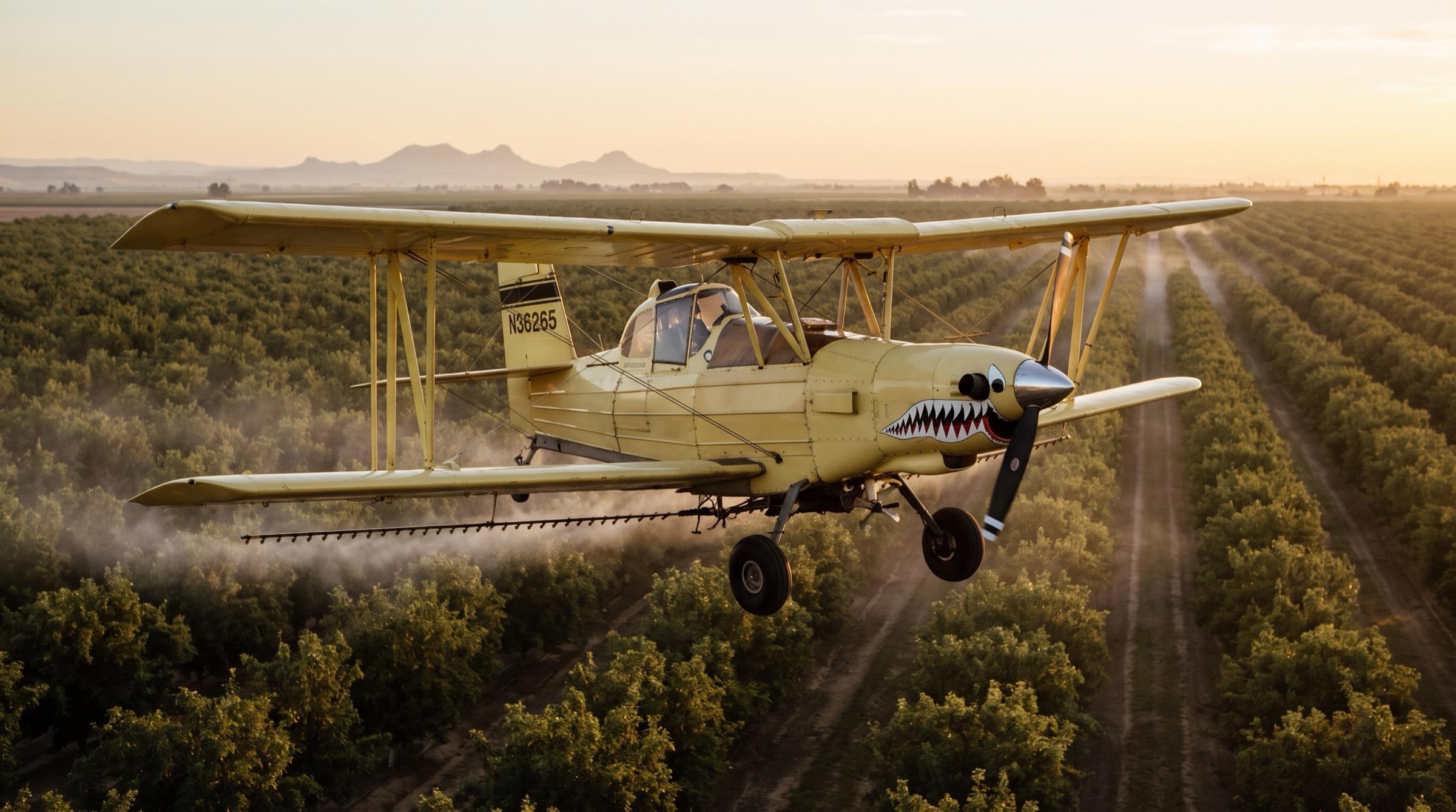
UC IPM is the University of California Statewide Integrated Pest Management Program, part of UC Agriculture and Natural Resources (UC ANR). Its website gives growers and pest control advisers (PCAs) free crop guidelines, weather data and degree-day models. This guide explains the main parts of the site and shows how a PCA uses them to time an orchard spray.
What is UC IPM?
The program publishes research-based pest management advice for California crops, homes and natural areas. University of California faculty, specialists and farm advisors write the crop guidelines. The program revises them as new research and new products appear.
Integrated pest management (IPM) means that you prevent pest problems, monitor pests, and treat only when monitoring shows a need. A treatment can be biological, cultural or chemical.
The site address is ipm.ucanr.edu. Older links, books and handouts often use the old address, ipm.ucdavis.edu. Use the ucanr.edu address for bookmarks and for links in your own records.
What are the main parts of the site?
The site has a separate section for each type of user. Farm users spend most of their time in the agriculture section and the weather section. The table shows the main sections.
| Site section | What it gives | Who uses it |
|---|---|---|
| Pest Management Guidelines | Crop-by-crop pages for each pest: identification, monitoring, thresholds, timing and treatment options | PCAs, growers, farm advisors |
| Year-round IPM programs | A season-by-season checklist for a crop, from dormancy to postharvest, with monitoring forms | Growers, PCAs, orchard managers |
| Weather, models and degree days | A degree-day calculator, pest and crop models, and degree-day tables | PCAs, consultants, researchers |
| California weather data | Daily and hourly data from stations across the state, plus long-term climate data | PCAs, growers |
| Identification tools and photo galleries | Photos of pests, natural enemies and weeds, plus a plant problem diagnostic tool | Growers, scouts, gardeners |
| Pesticide information | Active ingredient data and bee precaution ratings | PCAs, applicators, beekeepers |
| Pest Notes | Short fact sheets on home, garden and landscape pests | Home gardeners, landscape professionals |
What are the pest management guidelines?
The UC IPM pest management guidelines are the core of the site for farm users. Each crop has a set of pages, one for each major insect, mite, disease, weed and nematode. A pest page usually has the same parts: a description, the damage, the monitoring method, the treatment threshold and the treatment timing.
The guidelines name active ingredients and products, with notes on effects on natural enemies and bees. They do not replace the label or a written recommendation. A PCA reads the guideline, checks the current label, and then writes a recommendation for the field.
The guidelines also matter under California law. California regulations allow a label departure for a higher tank concentration only when it matches the current UC pest management guidelines. Our guide to DPR pesticide lookup tools shows how to check a product registration and find its California label.
What is a year-round IPM program?
A UC IPM year-round program is a checklist of IPM tasks for one crop, in season order. The walnut program, for example, has pages for dormancy, delayed dormancy, budbreak through bloom, nut development, harvest and postharvest. Each page lists the monitoring tasks and the environmental concerns for that stage.
The year-round program links back to the full pest management guidelines for details. It also includes monitoring forms that you can print and use in the field.
How do the UC IPM degree-day models work?
A degree day is a unit of heat above a lower temperature threshold over one day. An insect develops only within a temperature range, so heat units predict its growth better than calendar dates. Each pest model has a lower threshold, an upper threshold and a calculation method.
The biofix is the start date for the degree-day count. For many orchard moths, the biofix is a trap date, such as the first date that moths appear consistently in traps. The PCA counts degree days from the biofix and treats at the degree-day total that the guideline gives.
The program's degree-day calculator lets you set the thresholds and the calculation method for any model. It uses data from California Irrigation Management Information System (CIMIS) stations or from the program's PestCast stations. The UC IPM weather data pages also give daily and hourly readings, so you can choose a station near your orchard.
How does a PCA time a codling moth spray with the guidelines?
The walnut codling moth guideline is a clear example of degree-day timing. The walnut codling moth guideline sets these rules for the first flight:
- Biofix: the first date that moths appear consistently in traps and sunset temperatures reach 62°F.
- Thresholds: a lower threshold of 50°F and an upper threshold of 88°F.
- Timing for moderate to high populations: treat at 300 degree days after the first-flight biofix, or when small nutlets first appear, if that is later.
- Timing with an insect growth regulator: treat at 250 degree days after biofix.
- Low populations: treat at 600 to 700 degree days only if trap catches increase.
The guideline also gives timing for the second flight. The second-flight biofix usually comes about 1,060 degree days after the first-flight biofix.
Example: from biofix to spray date
This example shows the steps for one walnut block. It uses the rules above and no invented field data.
- Hang pheromone traps in the block before the first flight.
- Check the traps and record the catch at each visit.
- Record the sunset temperature each evening.
- Set the biofix on the first date that both biofix conditions occur.
- Choose the weather station nearest to the block.
- Enter the biofix date, 50°F and 88°F in the degree-day calculator.
- Add the degree days each day after the biofix.
- Compare the trap counts with the guideline's population levels.
- Find the target total for the product class that the PCA chooses.
- Book the aerial application a few days before the forecast reaches that total.
Caution: the degree-day total sets the timing, not the product or the rate. Before the job, get a written PCA recommendation and follow the label.
Step 10 matters for aerial work. An airplane can cover a block fast, but the schedule depends on wind, other jobs and the field crew schedule. A booking ahead of the target date keeps the job inside the window. Our codling moth guide covers trap use and damage in more detail.
How does the timing work for navel orangeworm and peach twig borer?
The same method works for other orchard moths, with different numbers. Each pest has its own biofix rule and thresholds.
| Pest | Biofix | Thresholds | Timing from the guideline |
|---|---|---|---|
| Navel orangeworm (almond) | Egg numbers and the number of egg traps with eggs increase for two consecutive checks | 55°F lower, 93.9°F upper, vertical cutoff | First-brood egg hatch at about 100 degree days after biofix |
| Codling moth (walnut) | Consistent trap catch and a 62°F sunset temperature | 50°F lower, 88°F upper | 300 degree days, or 250 with an insect growth regulator |
| Peach twig borer (peach) | The first moth caught in traps | 50°F lower, 88°F upper | About 400 degree days after the flight starts, or 300 if fruit has begun to color |
The navel orangeworm thresholds come from the navel orangeworm model page. The timing comes from the almond navel orangeworm guideline. For almonds, the guideline calls the start of hullsplit the most effective timing for a single insecticide application. Our navel orangeworm guide explains hullsplit timing and orchard sanitation.
You do not have to add the numbers by hand each day. Our NorCal spray timing tracker shows the degree days since biofix for navel orangeworm, codling moth and peach twig borer. You pick the pest, the county and your biofix date, and it shows the treatment window from the guidelines. You can also sign up for spray-window alerts.
What are the limits of degree-day models?
A model gives an estimate, and field monitoring confirms it. Weather at a station can differ from weather in your block, especially in low spots or near rivers. A late or false biofix moves every date that follows.
Use these checks to keep the model honest:
- Use the station closest to the block, with similar terrain.
- Keep trap counts for each block, not only for the ranch.
- Replace pheromone lures on the schedule in the trap instructions.
- Check the guideline each season for revised timing.
Orchard spraying from Live Oak
Sutter Butte Dusters flies orchard applications across the northern Sacramento Valley. We fly walnuts, almonds, prunes, peaches and persimmons, with five Ag Cats and one Air Tractor 602. See our orchard services page, then book your next orchard spray with your PCA's timing.
Questions
Yes. ipm.ucanr.edu is the current website of the UC Statewide IPM Program, part of UC Agriculture and Natural Resources. Older links and handouts often use the old address, ipm.ucdavis.edu. Update bookmarks and records to the ucanr.edu address.
Yes. The guidelines are free to read online for every major California crop. University of California faculty, specialists and farm advisors write them. They give monitoring methods, thresholds and timing, but a PCA recommendation and the product label still control each application.
The UC IPM degree-day calculator uses data from CIMIS stations and from the program's own PestCast stations. The weather pages also give daily and hourly readings and long-term climate data. Choose the station closest to your block, with similar terrain.
The UC IPM navel orangeworm models use a lower threshold of 55°F and an upper threshold of 93.9°F, with a vertical cutoff. The almond guideline expects first-brood egg hatch at about 100 degree days after biofix.