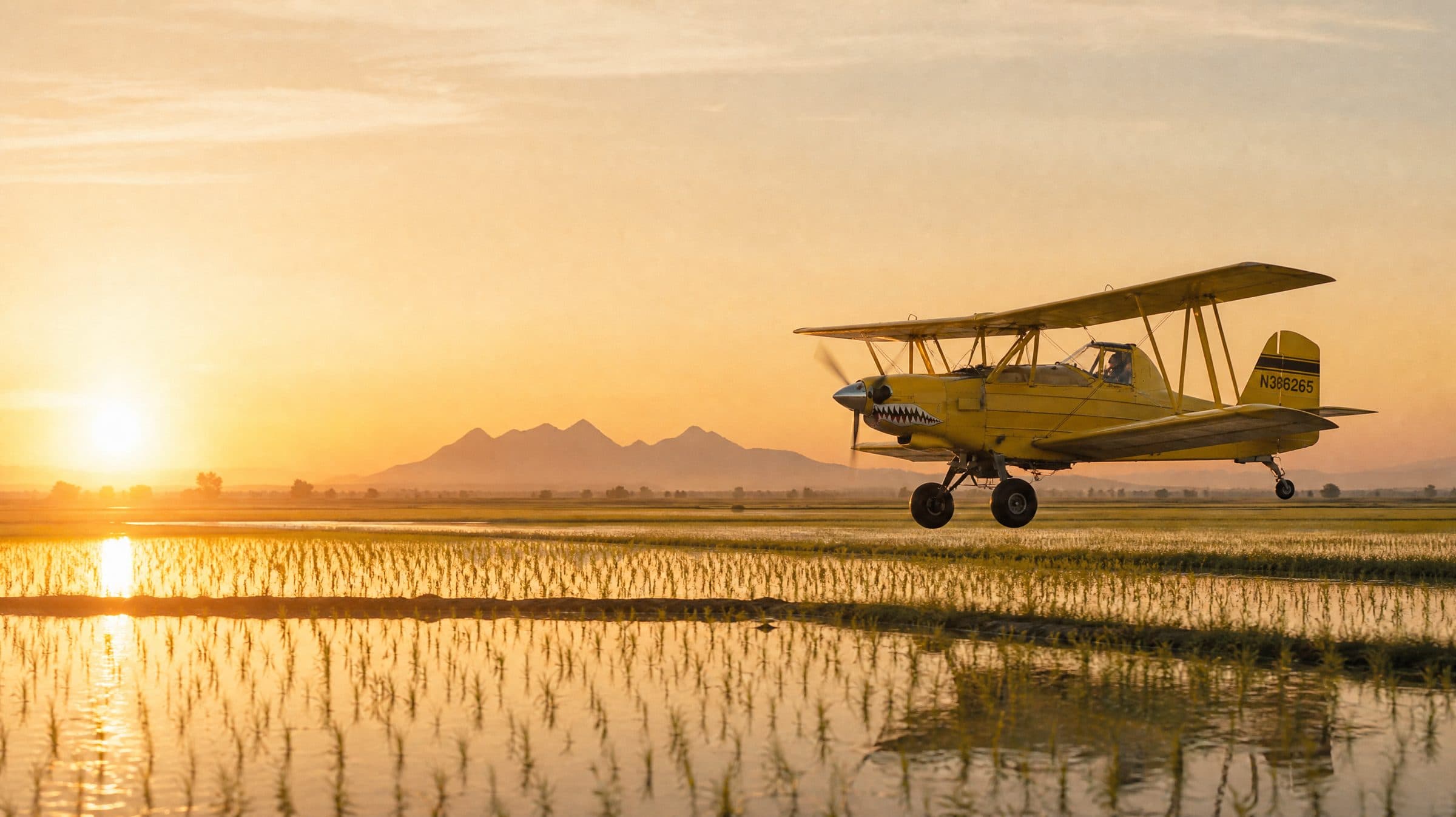
The 2021 UC Davis cost study for Sacramento Valley rice lists the flights on a typical farm. Seed goes on by air from about April 20 to May 20, at 175 pounds per acre onto a flooded field. In May, a grass herbicide goes on all acres by air. Copper sulfate for algae goes on about 30 percent of the acres, and an insecticide for rice water weevil and tadpole shrimp treats about 30 percent, mostly borders and levees. In July, about 75 percent of the acres get a nitrogen top-dress by air, and about 25 percent get an armyworm insecticide. From July through August, one fungicide flight on about 75 percent of the acres controls stem rot, aggregate sheath spot and blast. Some herbicides in the same study go on by ground. Every field is different, but most rice fields see the plane more than once a season.
Source: UC Davis rice cost study, Sacramento Valley, 2021
California grows rice in a water-seeded system: the field floods first, and the seed goes onto the water. UC IPM says the system began as a way to control terrestrial barnyardgrass, a weed that floodwater holds back. Water 4 inches deep still gives good control of that weed. Early and late watergrass grow through 4 inches of water, so UC IPM says deeper water, about 7 inches, is needed to control them. A ground rig cannot work in a flooded check, and an airplane leaves no wheel tracks and does not compact the seedbed. The 2021 UC Davis cost study budgets aerial seeding at $12.00 per hundredweight of seed, or about $21 per acre at 175 pounds. Water depth, weeds and herbicide timing all tie together, so plan the flood and the flights with your PCA before the season starts.
Sources: UC IPM, rice integrated weed management; UC Davis rice cost study, Sacramento Valley, 2021
A lot. Sutter County's 2025 crop report lists 112,000 harvested acres of rice. Rice is the county's top crop, with a total value of $220.2 million. Colusa County's 2024 report lists 118,386 harvested acres of rice, worth $199.8 million, plus 9,619 acres of certified rice seed. Butte, Glenn and Yuba counties also list rice among their main crops. The 2021 UC Davis cost study calls water seeding the main way rice is planted in California. So in a few spring weeks, much of the year's rice seed in these counties goes on from the air. The same fields come back for herbicide, fertilizer and pest flights in summer. Each county seat that we serve is 34 miles or less from our strip in Live Oak in a straight line. Send your fields early, because the spring schedule fills fast.
Sources: Sutter County 2025 crop report; Colusa County 2024 crop report; UC Davis rice cost study, Sacramento Valley, 2021