
Rice
Armyworm in rice: how to scout it and when to treat
By the Sutter Butte Dusters team · · 7 min read
Armyworm is a caterpillar that can strip the leaves from a rice field in early summer. Two kinds can show up in a rice field, but only true armyworm causes economic damage to rice. That is the finding of the UC IPM guideline for armyworms in rice. UC IPM is the pest management program of the University of California. This guide shows you how to find the pest, how to read the UC threshold, and who picks the treatment.
Which armyworm damages rice?
True armyworm is the one that matters in a rice field. Its scientific name is Mythimna unipuncta. You may also find the western yellowstriped armyworm in rice, but it usually does not cause economic damage. Its moths lay eggs only on broadleaf weeds, and its caterpillars feed mainly on broadleaf plants.
Know which caterpillar you have before you spend money. This table compares the two, from the UC IPM guideline.
| Feature | True armyworm | Western yellowstriped armyworm |
|---|---|---|
| Effect on rice | Causes economic damage | Usually no economic damage |
| Where the moth lays eggs | On rice or other grasses | Only on broadleaf weeds |
| What the caterpillar eats | Rice leaves and rice heads | Mainly broadleaf plants |
| Moth | Buff front wings with one white spot near the middle | Mottled front wings and silver-gray hind wings |
The true armyworm moth flies at night and has a wingspan of about 1.5 inches.
Why is true armyworm hard to see?
True armyworm hides well, so damage can appear before you see the pest. The moth lays eggs in lines and rolls the leaf around them. The eggs are hard to find for this reason.
The caterpillar passes through six growth stages. In the early stages, it is small and eats little. You start to see leaf loss when the caterpillars reach the fifth and sixth stages in early summer.
The caterpillars feed mainly at night or on cloudy days. In the day, they hide among the tillers near the water. A tiller is a side shoot of the rice plant. This habit is the reason for an evening check, which we explain below.
When does armyworm come into a rice field?
True armyworm has two generations in rice, and each one can hurt the crop in a different way. A panicle is the head of the rice plant that holds the grain.
| Time | What happens | What the caterpillars eat |
|---|---|---|
| Spring and early summer | The first moths fly and lay eggs in rice and nearby plants | Rice leaves |
| Mid-summer | The second moths fly and lay eggs | Rice leaves and panicles |
UC IPM says the caterpillars pupate in about 3 to 4 weeks during summer. A pupa is the resting stage between caterpillar and moth. The pupae sit between the rice tillers, and the moths that come out may lay eggs in rice again.
What damage does armyworm do to rice?
Armyworm damage has two forms, and each form has its own threshold. The first form is leaf loss, and the second form is panicle loss.
Leaf loss. The caterpillars chew angular pieces from the leaves. In a bad case, they eat all the leaves and leave only part of the stem above the water. UC IPM says that leaf loss over 25% in early summer reduces grain yield. Injury is most serious at stem elongation and grain formation.
Panicle loss. The caterpillars can chew the small stems of the panicle, near the young kernels. The kernels then dry before they fill. The damaged panicle branches turn white and hang down. UC IPM reports yield loss when more than 10% of the panicles have this damage.
Leaf loss alone during flowering and grain fill does not usually reduce yield. At that stage, the panicles deserve your attention.
White panicles have other causes too. UC IPM lists stem rot, cool-temperature blanking (empty heads from cold) and rat damage. Confirm the cause before you make a decision. Our guide to rice pests and diseases shows how the main problems compare.
How do you scout for armyworm in rice?
UC IPM gives two methods, one for each form of damage. Do not count caterpillars alone, because UC IPM does not give a caterpillar count as a threshold.
Leaf loss, from late June to early July
- Look for armyworm feeding on the leaves.
- After you see feeding, check the field twice a week until the caterpillars are gone.
- In an injured area, inspect the plants from the water up to the leaf tips.
- Check the water surface for caterpillars that dropped from the plants.
- Record whether 25% or more of the leaves are gone.
- Record whether caterpillars are still present.
- Move 5 to 10 feet along a straight line and repeat.
- Stop after 10 stops, then repeat in other areas of the field.
Panicle loss, after the panicles come out
- Look for white, broken panicle branches.
- After you see this injury, sample twice a week.
- Mark an area of 1 square foot.
- Find the share of panicles that have injury.
- Inspect the plants down to the water for armyworms.
- Record the percent of injured panicles and whether armyworms are present.
- Move 5 to 10 feet and repeat until you have 10 samples.
- Repeat in other areas with panicle injury.
What is the UC threshold for armyworm treatment?
The UC threshold needs two things: enough damage, and live armyworms. If one is missing, UC IPM does not advise a spray. This table sums up the guideline.
| Crop stage | What you find | UC IPM guidance |
|---|---|---|
| Late June to early July | More than 25% leaf loss, and armyworms present | Consider a treatment in those areas only |
| Late June to early July | Leaf loss, but few or no caterpillars | Check again in the evening, when caterpillars are more active |
| Mid to late July | No armyworms present | Do not spray, because they have probably finished development |
| Panicle emergence to grain maturity | 10% of panicles damaged, and true armyworms present | Consider a treatment |
| Panicle emergence to grain maturity | 10% or more panicle loss, but no armyworms seen | Check in the evening. If you find none, do not spray, because they have probably pupated |
UC IPM says to limit any application to the areas with economic damage.
How does armyworm control work without a spray?
Natural control does much of the work in most fields. Drowning and natural enemies kill many armyworms. UC IPM says that natural enemies in other crops and along field edges often keep armyworms from becoming rice pests.
Look for these signs before you decide to treat:
- White silk cocoons on tillers and leaves. Small parasitic wasps grow inside the caterpillar and then come out to spin these cocoons.
- Limp, yellowish caterpillars. A virus can kill them. Dead caterpillars hang from the plants and look deflated.
Weeds matter too. UC IPM says that early weed control in and around the field may limit armyworm in rice. Our post on integrated pest management explains how scouting, natural enemies and treatments fit together.
Organic fields rely on cultural and natural controls. One biological material on the UC IPM list kills about 50 to 60% of true armyworm. Ask your adviser whether it fits your certified crop.
Who picks the armyworm treatment?
Your PCA picks the product and the rate. A PCA is a licensed pest control adviser, and the PCA writes the recommendation for your field. The label is the law, so the label sets the legal limits for every application.
Give your PCA these facts before you ask for armyworm treatment:
- The crop stage in each area of the field.
- Your percent of leaf loss or panicle loss from each sample.
- Whether you saw live armyworms, and at what time of day.
- A map of the areas that passed the threshold.
Ask your PCA about the wait before workers can enter the field and the wait before harvest. Our post on REI and PHI explains those two intervals. Our rice spray guide shows how these treatments fit into the full rice season.
Rice armyworm work from Live Oak
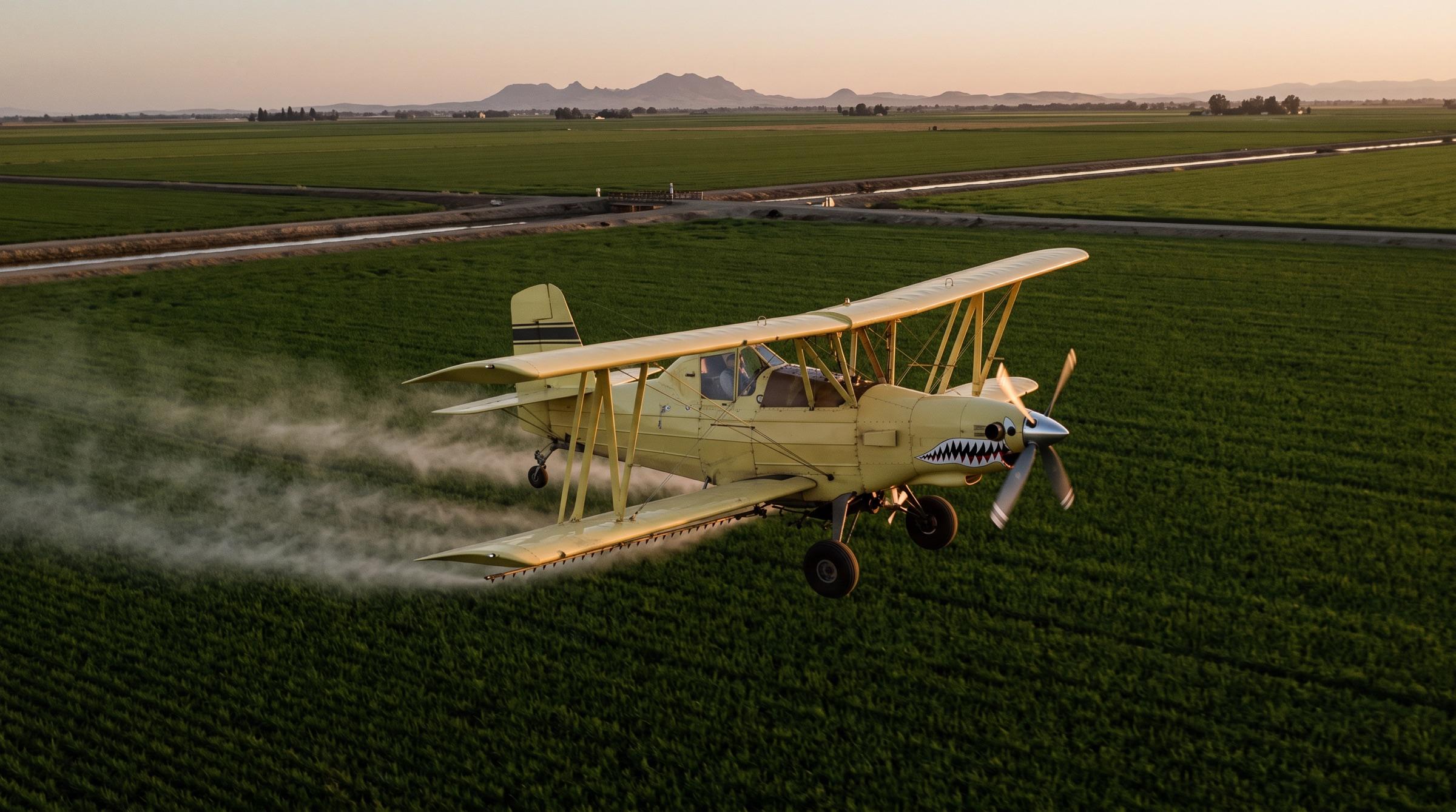
We fly from 4080 Clark Rd in Live Oak, with five Ag Cats and one Air Tractor 602. When your PCA recommends a treatment, we apply that product at the label rate. We can treat only the parts of the field that your PCA marks. Learn more about our rice work, or get a quote for your field.
Questions
Check first whether you have true armyworm and whether live caterpillars are present. Many die from drowning and natural enemies. If the UC IPM threshold is met, your PCA picks a product and rate, and you treat only the areas with economic damage.
It usually does not cause economic damage. UC IPM says its moths lay eggs only on broadleaf weeds, and its caterpillars feed mainly on broadleaf plants. Early weed control in and around the field may limit armyworm in rice.
UC IPM says not to spray if armyworms are absent, especially in mid to late July, when they have probably finished development. If panicle loss is 10% or more and an evening check finds no armyworms, they have probably pupated, so do not spray.
UC IPM lists stem rot, cool-temperature blanking and rat damage as causes that look like armyworm panicle loss. Look for live armyworms down to the water level, and check in the evening, before you decide what caused the damage.
