
Orchards
Brown rot in peaches: bloom and preharvest spray timing
By the Sutter Butte Dusters team · · 9 min read
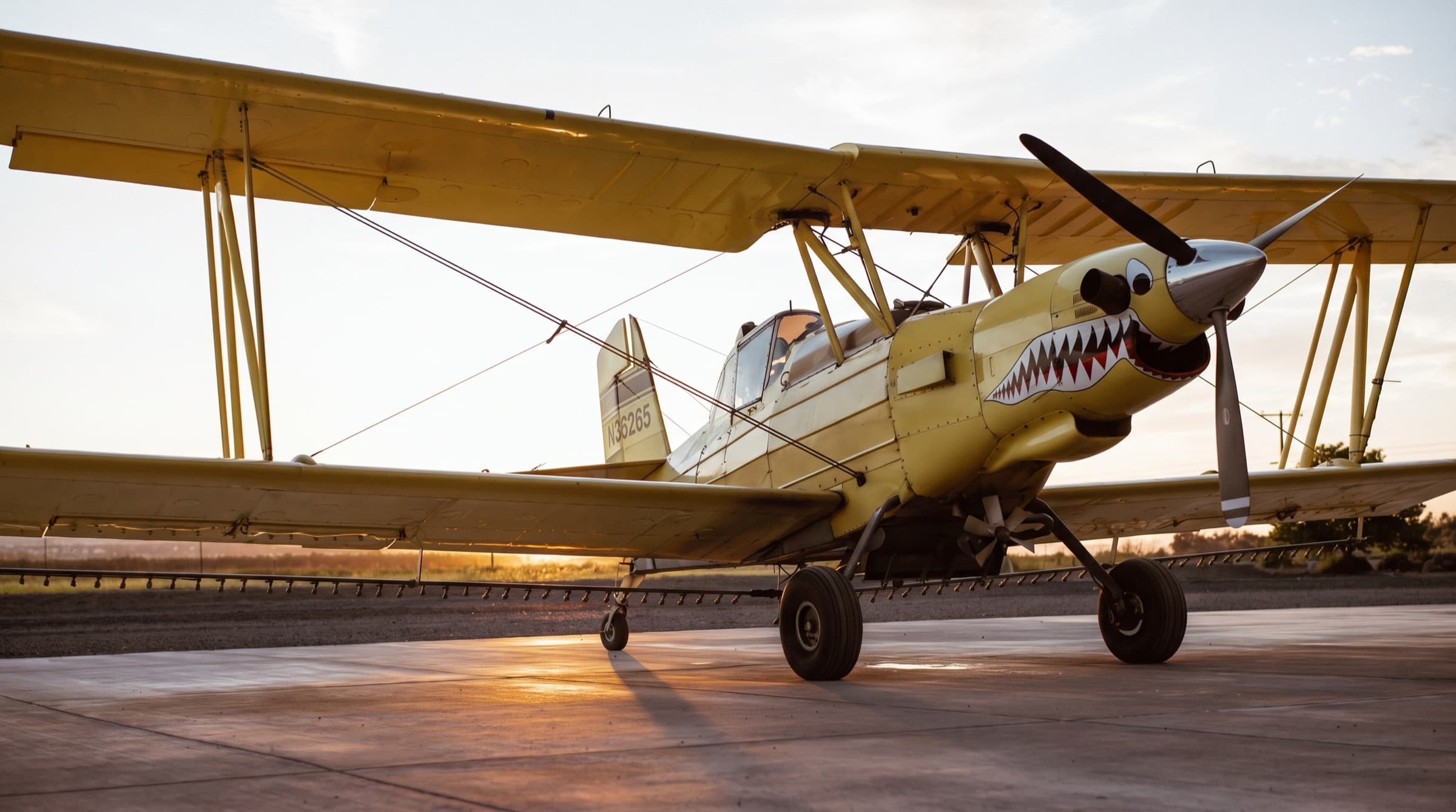
Brown rot in peaches starts at bloom, when rain wets the open flowers, and it comes back as fruit rot in the weeks before harvest. This guide gives the UC spray timing for both phases, the weather that drives infection and the Sutter-Yuba bloom calendar. It also covers prunes, almonds and the role of an airplane on wet ground.
What is brown rot, and what causes it?
Brown rot is a fungal disease of peaches, nectarines and other stone fruit, and of almonds. Two fungi cause it in California: Monilinia fructicola and Monilinia laxa.
The disease has two phases. Blossom blight kills flowers, spurs and shoots in spring. Fruit rot destroys fruit as it ripens and after harvest. In peaches, bloom infections feed the fruit rot. The UC Statewide IPM Program (UC IPM) peach blossom blight guideline says bloom sprays help reduce ripe fruit rot.
How do you identify brown rot in peaches?
The UC IPM peach guidelines describe these symptoms.
| Stage | What you see |
|---|---|
| Bloom | Gum oozes at the base of infected flowers. |
| Shoots | Blossom spurs and nearby leaves collapse. Cankers on the twigs have tan centers and dark margins. |
| Humid weather | Gray-brown spore masses grow on dead flower parts and twig cankers. |
| Ripening fruit | Firm, round, dark brown spots spread fast over the fruit. The rotted area later turns black. |
| After harvest | Rotted fruit dry into mummies on the tree or on the ground. |
How do you tell brown rot from gray mold and Rhizopus rot?
Two other fruit rots appear at harvest. The UC IPM peach ripe fruit rot guideline separates them this way.
| Rot | Lesion | Fungus you can see | When it attacks |
|---|---|---|---|
| Brown rot (Monilinia) | Firm, round, dark brown spot that later turns black | Spore masses on the rotted area | Uninjured or injured ripening fruit on the tree |
| Gray mold (Botrytis) | Firm, round, light tan to grayish spot | Gray spores | Uninjured or injured ripening fruit on the tree |
| Rhizopus rot | Soft, watery decay | White fungal threads with tiny black dots, most often near the edge of the container | Injured ripe fruit only, after harvest |
Ask your licensed pest control adviser (PCA) to confirm the disease before you choose a fungicide.
How does the brown rot fungus survive the winter?
The brown rot fungus survives the winter in mummies, which are old rotted fruit. Mummies on the ground form small cup-shaped bodies that release spores while the trees bloom. Mummies that stay in the tree also produce spores. Wind and rain splash carry the spores to the flowers.
What weather causes brown rot infection?
Water and warmth drive infection. Flowers and fruit must stay wet for some hours, and warm weather shortens that time.
| Condition | What the source says | Source |
|---|---|---|
| Blossoms at 32 to 86°F | Infection can occur across this range. The best range for the fungus is 72 to 77°F. | Virginia Tech Extension, 2024 |
| Wet for 24 hours or more | Infection is most likely at any temperature. | Virginia Tech Extension, 2024 |
| 50°F | Tissue must stay wet for 18 hours for infection. | University of Kentucky, 2020 |
| 77°F | 5 hours of wetness is enough for infection. | University of Kentucky, 2020 |
| Rain at bloom, mid-70s °F | Best conditions for infection of prune and almond flowers | UC IPM |
| Rain or dew on ripening fruit | Wetness, cracks and other injuries increase preharvest infection | UC IPM |
Fruit gets more susceptible near harvest. The University of Kentucky brown rot fact sheet says the risk rises as fruit softens and gains sugar, 2 to 3 weeks before harvest. Early infections can stay hidden until the fruit matures. Young fruit resist infection better, but wounds from insects, birds or hail let the fungus in.
These figures come from humid eastern states. Here, peach bloom falls in the rainy season and harvest comes in the dry summer. At harvest, watch dew, fruit cracks and insect wounds, which UC IPM names as risk factors.
When to spray for brown rot in peaches
Brown rot fungicides protect healthy tissue, but they do not cure an infection. The spray must go on before the wet weather. UC IPM gives two windows for peaches and nectarines.
| Window | UC IPM timing | When it applies |
|---|---|---|
| Bloom | 20 to 40% bloom, then 80 to 100% bloom | Susceptible varieties, or heavy rain and other high-risk conditions |
| Preharvest | As needed in the last 4 weeks before harvest | Uninjured fruit, before infection |
| Rhizopus | 10 days to 1 day before harvest | Orchards where Rhizopus rot is a problem |
A preharvest spray cannot protect injured fruit. UC IPM also says early-maturing cultivars typically have little trouble with ripe fruit rot. After harvest, storage below 40°F controls Rhizopus rot.
A preharvest decision rule for peaches
Use these steps with your PCA. Color break is the point when the green ground color of the fruit starts to turn yellow.
- Estimate the harvest date, and mark the 4-week preharvest window for each variety.
- Examine fruit on the trees every other week after color break.
- Record blossom blight, twig cankers, rotted fruit, insect wounds and cracks.
- Watch the forecast for rain, and note mornings with heavy dew.
- Ask your PCA for a written recommendation if these risk factors appear.
- Check that the label preharvest interval fits the picking date.
- Apply the spray to uninjured fruit before the wet weather.
- Take a fruit damage sample at harvest to judge the program.
A late variety with spring blight, wounded fruit and a wet forecast has the highest risk.
When do peaches bloom in the Sacramento Valley?
UC Cooperative Extension (UCCE) records peach full bloom in Sutter and Yuba counties. From 2003 to 2026, it ranged from February 26 (2016) to March 19 (2019). That is a spread of about three weeks, so follow the bloom stage in each block, not the calendar. Full bloom was March 3 in 2026.
Bloom date also sets the harvest date. The UCCE Sutter-Yuba 2026 peach harvest timing article says heat in the first 30 days after bloom predicts harvest. An average year has about 6,000 growing degree hours in that period, and more heat brings an earlier harvest.
| Period | Orchard stage | Brown rot work |
|---|---|---|
| November to January | Dormant | Prune out blighted twigs. Remove mummies from the trees and the floor. |
| Late February to about March 20 | Peach bloom | Treatments at 20 to 40% and 80 to 100% bloom, as the PCA directs. |
| Mid to late March | Prune bloom | Sutter County prune full bloom was March 20 to 23 in 2024 and March 23 to 25 in 2025. |
| April to color break | Fruit growth | Predict the harvest date. Control fruit-feeding insects. |
| Color break to harvest | Ripening | Examine fruit every other week. Preharvest sprays in the last 4 weeks, as needed. |
| After harvest | Postharvest | Remove fruit left on the trees before it becomes a mummy. |
Sources: UCCE Sutter-Yuba peach bloom records (Clarissa Reyes, 2026). UCCE prune season retrospectives for 2024 and 2025 (Jamie Ott).
Is aerial application effective for brown rot treatment?
Aerial application (crop dusting) is a useful brown rot treatment when the ground is wet, but it is not the first choice on dry ground. The UC IPM peach guideline says aerial applications are generally not as effective as properly applied ground sprays. It also says they may be necessary when the orchard floor is wet. We agree with both points.
The reason is timing. February and March storms can keep an airblast sprayer out of the rows for days. An airplane does not touch the orchard floor, so it can put the fungicide on before the storm.
Your PCA decides whether aerial coverage fits the block. Many growers use a ground sprayer on a dry floor and an airplane on a wet one. Our posts on orchard spraying by air and aerial spraying vs a ground rig compare the two methods.
Which brown rot fungicide groups do UC guidelines list?
We do not recommend products or rates. The UC IPM peach tables list brown rot fungicides from several mode-of-action groups, numbered by the Fungicide Resistance Action Committee (FRAC). They include Groups 1, 3, 7, 9, 11 and 17, and multi-site contact fungicides.
Resistance is a real local problem. The UC IPM peach guideline says that strains resistant to thiophanate methyl (Group 1) are common, especially in the Sacramento and northern San Joaquin Valleys. The same guideline gives a California rotation rule. Make no more than one application of a Group 1, 4, 9, 11 or 17 fungicide before you rotate to a different group. For other groups, make no more than two applications in a row.
Many brown rot fungicides are premixes of two groups, so count each group in the rotation. The label sets the rate, the restricted entry interval and the preharvest interval. Our post on pesticide resistance explains rotation in more detail.
What brown rot treatment works besides fungicide?
Sanitation lowers the amount of fungus that reaches the flowers and fruit. The UC IPM peach and prune guidelines list these practices:
- Mummy removal. Pruning crews remove mummies and blighted shoots from the orchard and destroy them.
- Floor mummies. Cultivation buries mummies on the ground.
- Post-harvest cleanup. Remove peaches left on the trees soon after harvest.
- Thinned fruit. Remove thinned fruit, or turn it under.
- Insect control. Control peach twig borer, oriental fruit moth and other fruit-feeding insects.
- Nitrogen and water. Use appropriate levels of nitrogen fertilizer and irrigation water, as the UC IPM ripe fruit rot guideline advises.
These integrated pest management steps do not replace bloom protection in a wet year.
What about brown rot in prunes and almonds?
On brown rot, prunes differ from peaches in one important way. The UC IPM guideline for prune brown rot blossom and twig blight says spring control does not appear to change fruit rot levels at harvest. It recommends spring sprays in orchards with chronic blossom and twig blight.
| Crop | UC IPM bloom timing | Notes |
|---|---|---|
| Prune | Green bud and full bloom, plus popcorn stage if bloom is long and wet | Preharvest sprays as needed 4 to 6 weeks before harvest |
| Almond | Pink bud (5 to 10% bloom) and full bloom. In a low-rain year, full bloom alone is usually enough. | Drake, Winters and Wood Colony are highly susceptible. Butte, Carmel and Ne Plus Ultra are very susceptible. |
Almond bloom also means honey bees in the orchard. Our post on bees and pesticides explains the precautions.
How do you plan a bloom spray for brown rot?
Use this checklist in the weeks before bloom.
- Get the PCA's written recommendation before bloom starts.
- Confirm that the label allows aerial application, if the floor may be wet.
- Mark power lines, wells, homes and other hazards on the block map.
- Book the applicator early for each bloom stage that the PCA names.
Caution: Bees may work the orchard at bloom. Follow the bee precautions on the label before the next step.
- Ask the county agricultural commissioner about registered apiaries near the block.
- Apply the treatment so that it dries before the rain.
- Check the blossoms and shoots for blight after petal fall.
Our guide to preparing a field for aerial application covers the block map.
Brown rot treatment in the northern Sacramento Valley
We fly orchards across Sutter, Yuba, Butte, Glenn, Colusa, Placer and Yolo counties, including peaches, prunes and almonds. Bloom sprays for brown rot in peaches and prunes come in February and March. Bloom fungicide work is part of our crop protection service. When the floor is too wet for a sprayer, an airplane can treat the block before the rain. Your PCA chooses the material, and we apply it to the label. To schedule a bloom flight, get a quote for your field.
Questions
No spray cures an infection, so treatment is prevention. Remove mummies and blighted twigs in winter. Apply a protective fungicide at the UC bloom timings before rain, and again in the last 4 weeks before harvest if needed. Your PCA chooses the material and rotates the FRAC groups.
The UC IPM prune guideline lists green bud and full bloom, with a popcorn-stage treatment if bloom is long and wet. It recommends spring sprays in orchards with chronic blossom and twig blight. For fruit rot, preharvest sprays go on as needed 4 to 6 weeks before harvest.
The fungus can become resistant to one mode of action. UC IPM reports that strains resistant to thiophanate methyl are common in the Sacramento and northern San Joaquin Valleys. Rotate FRAC groups as the UC guideline describes, and follow the label and your PCA's written recommendation.
Yes, if the product label allows aerial application. UC IPM says aerial sprays are generally not as effective as properly applied ground sprays, but they may be necessary when the orchard floor is wet. An airplane can put the fungicide on before the rain without rutting the rows.
