
Seeding
Aerial cover crop seeding: timing, rates and results
By the Sutter Butte Dusters team · · 8 min read
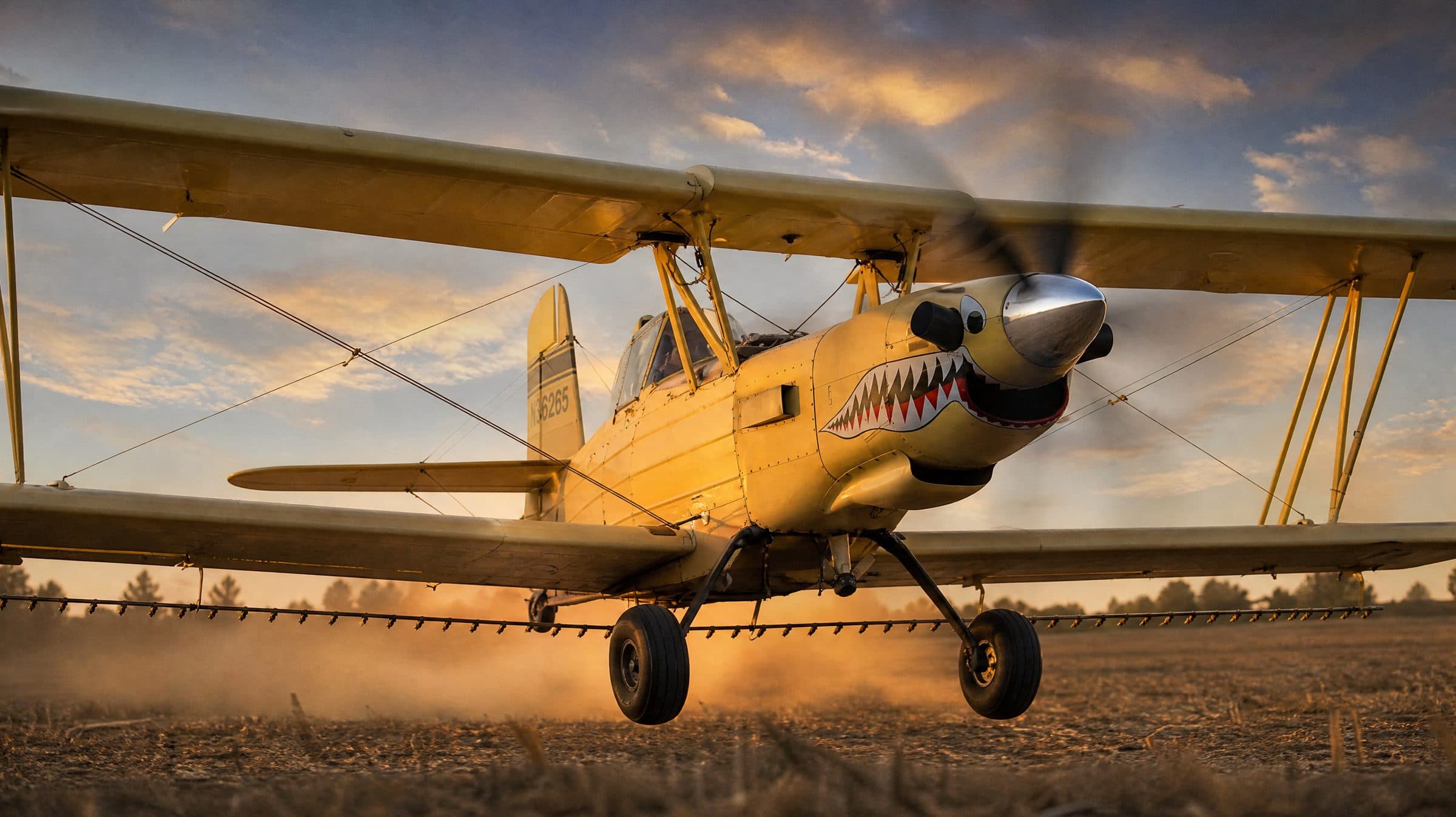
Aerial cover crop seeding is the spread of cover crop seed from an airplane onto a harvested field, or into a crop that still stands. The airplane covers many acres in one day and keeps tractors off soft fall ground. This guide gives the timing, seed rates, species and costs that decide whether the stand comes up in the northern Sacramento Valley.
When should you plant a winter cover crop in the Sacramento Valley?
A winter cover crop is a crop that a grower plants in the fall to protect and feed the soil, not to sell. UC Cooperative Extension advisor Janine Hasey and Mark Cady write that October to early November suits cover crop planting in the Sacramento Valley. By December, the soil is too cold for fast, even germination. They also advise a light irrigation by late November if the rain has not come. Their advice is for orchard floors, but open fields have the same cold soil by December.
Earlier is almost always better, because fall growth slows as the days get cooler. Cereal rye tolerates a late date better than most species, but a late stand roots less deeply.
Seed from the air needs an earlier date than seed from a drill. A drill is a planter that places seed into the soil at a set depth. Broadcast seeding drops the seed on top of the soil, so it starts more slowly. An NRCS Missouri sheet on aerial seeding says to fly 7 to 10 days before you would drill.
What soil conditions does aerial seeding need?
Moisture at the surface decides most aerial seeding results. The NRCS sheet says the top half inch to 1 inch of soil needs moisture at seeding, or within 10 days after it. Seed that lies on dry ground for longer can dry out, and insects, birds and rodents eat it.
The surface also matters. A loose, rough surface with cracks or residue catches seed and holds moisture, while a flat, hard, dry surface gives poor results. Fresh residue lets seed fall through to the soil. Older residue packs into a mat that holds seed off the ground.
Irrigation can carry the stand when the fall stays dry. The NRCS sheet describes two methods:
- The airplane seeds just before the last irrigation of the cash crop. A gap of about 30 days from seeding to harvest is usually acceptable.
- The airplane seeds just before harvest. Harvest traffic presses the seed into the soil, and the grower irrigates right after harvest.
Our crop dusting season calendar shows where fall seeding fits in the year.
Which cover crops work best for aerial seeding?
Seed size and shape decide how well a cover crop starts from the surface. Small, round seed rolls into cracks and finds moist soil. Large legume seed needs firm seed-to-soil contact, which means seed pressed against moist soil on all sides. The table follows the seed groups in the NRCS sheet.
| Seed group | Examples | Result from the air | Rate change from the drilled rate |
|---|---|---|---|
| Small grains | Cereal rye, wheat, barley, oats, triticale | Start easily on the surface when the soil is moist | 25 to 50 percent more |
| Ryegrass | Annual, Italian and perennial ryegrass | Good when rain follows soon after seeding | Add 2 to 3 pounds per acre |
| Small-seeded brassicas | Radish, turnip, mustard | Good; the small round seed rolls into cracks | Same as the drilled rate |
| Small-seeded legumes | Clovers | Fair; needs good moisture and soil contact | 25 to 50 percent more |
| Large-seeded legumes | Vetch, cowpea | Poor unless the seed is worked into the soil | Close to double |
Brassicas need an early date. The NRCS sheet asks for soil warmer than 45°F and seeding about 4 weeks before the average 28°F freeze.
Two cautions apply to legumes and brassicas. Legume seed inoculant needs moisture and soil contact to work, so a dry surface weakens it. Mustards are sensitive to broadleaf herbicide carryover, and the NRCS sheet names 2,4-D as an example.
What cover crop seeding rate should you use from the air?
The goal of the cover crop sets the base rate. Weed suppression and erosion control need a denser stand than living roots alone. Start with the drilled rate from your seed supplier, your county UC Cooperative Extension office or your NRCS office.
Then raise the rate for the air. The NRCS sheet gives 25 to 50 percent above the drilled rate for most seed, and no increase for brassicas. For example, cereal rye that you would drill at 60 pounds per acre needs about 75 to 90 pounds per acre by air.
Field edges lose the most seed, because pests move in from ditches and uncropped land. The NRCS sheet advises a higher rate along field edges and headlands, which are the strips at the ends of a field where equipment turns. Order extra seed for the outside passes.
Mixes need two more checks. First, a fast grass such as cereal rye outgrows a legume in spring. If you want the legume to carry the stand, cut the grass share well below half of the mix. Second, light and heavy seeds travel different distances from the spreader. Send us the seed tag so the pilot can set the swath for the mix.
Should you seed cover crops before or after harvest?
Seeding cover crops into a standing crop gives them a head start. The seed lands while the soil is still warm, and the crop canopy keeps the surface moist.
The NRCS sheet gives two timing rules from the Midwest. Seed soybeans before they drop more than 10 percent of their leaves. Seed corn after the kernel milk line is at least half formed.
Seeding after harvest suits crops that leave the ground bare, such as tomatoes, beans and safflower. Fly within a day or two of harvest, while the residue is loose and the soil holds some moisture.
Check the herbicide history before you seed. Some herbicides from the summer program stay active in the soil and kill cover crop seedlings. Ask your licensed pest control adviser (PCA) about carryover risk on each field.
How do you plan an aerial cover crop seeding job?
Caution: a soil-active herbicide from the summer can kill the new stand. Do step 2 before you buy seed.
- Write down the main goal for the cover crop, such as erosion control or nitrogen.
- Ask your PCA about herbicide carryover on each field.
- Choose a species or mix that starts well from the surface.
- Get the drilled seed rate from your seed supplier or extension office.
- Raise that rate 25 to 50 percent, except for brassicas.
- Order extra seed for field edges and headlands.
- Find the field address, APN or FSA farm and tract number.
- Mark power lines, homes, water and sensitive crops on a field map.
- Send us the seed mix, the rate per acre and the harvest date.
- Confirm how the seed will reach our loading site.
- Schedule an irrigation, or watch for rain within 10 days of the flight.
- Count the seedlings after the first soaking rain.
Our guides to finding the APN or FSA farm number and how to hire a crop duster cover steps 7 to 10.
What results should you expect from aerial seeding cover crops?
Aerial seeding trades some seed-to-soil contact for speed and timing. The NRCS sheet states that a drill, or broadcast seed worked lightly into the soil, gives the most reliable stand. Seed from the air still gives a good stand on a loose, moist surface.
| Method | Seed-to-soil contact | Works in a standing crop or on wet ground | Iowa average custom rate, 2026 |
|---|---|---|---|
| Aerial seeding | Low to medium | Yes | $14.70 per acre |
| Grain drill | High | No | $19.05 per acre |
A full winter cover crop gives a lot back. In UC demonstration plots in tree crops in 2007 and 2008, cover crops made 2,000 to over 8,000 pounds of biomass per acre. They held 31 to 250 pounds of nitrogen per acre, with an average of 92 pounds. The advisors estimate that about half of that nitrogen becomes available to the next crop.
Judge the stand after the first soaking rain. Count the seedlings in a 1-square-foot frame at several places, including the edges. Compare the average with the seed supplier's target stand. Thin borders usually point to bird or rodent losses.
How much does aerial cover crop seeding cost?
Few public custom rate surveys cover California, so the best numbers come from the Midwest. The 2026 Iowa Farm Custom Rate Survey from Iowa State University lists aerial seeding of a cover crop at an average of $14.70 per acre. Its range is $10 to $18 per acre, from 25 responses. The same survey lists cover crop drilling at an average of $19.05 per acre.
These rates do not include seed, and the higher aerial rate adds seed cost. California prices differ, and field size, obstacles and ferry distance all change the price. A quote for your specific field gives the real number, and our guide to crop dusting cost per acre explains each factor.
The NRCS sheet says helicopters handle irregular fields better, while airplanes carry heavier loads and fly faster. Read our comparisons of helicopters and airplanes and drone costs per acre before you choose.
When should you terminate a winter cover crop?
Plan the end of the cover crop before you seed it. Termination is the step that kills the cover crop before the next cash crop. UC Agriculture and Natural Resources says that the best termination time depends on the species, the weather and the next cash crop. Growers use flail mowers, roller-crimpers or herbicides. For an herbicide, follow the label and your PCA's written recommendation.
Pick a date well ahead of planting, or at planting. A large stand killed 1 to 2 weeks before planting on moist soil can leave a mat that keeps the soil wet. If the next crop carries crop insurance, check the USDA Risk Management Agency cover crop termination guidelines first.
Aerial cover crop seeding in the northern Sacramento Valley
We spread cover crop seed after harvest across Sutter, Yuba, Butte, Glenn and Colusa counties from our strip at 4080 Clark Rd in Live Oak. Our Ag Cats carry hoppers and spreaders built for dry products like seed. Cover-crop seeding is one of the jobs on our row crops page, and our aerial seeding service page also covers rice. Send us your field, seed mix and harvest date, and we will plan the flight for your window. Get a quote for your field.
Questions
Yes. An airplane spreads cover crop seed from its hopper onto a harvested field or into a standing crop. It covers many acres in a day and works when the ground is too wet for a tractor. The seed still needs moist soil to start.
Small grains such as cereal rye, oats, wheat, barley and triticale start easily from the soil surface. Ryegrass and small-seeded brassicas such as radish also do well. Large-seeded legumes such as vetch start poorly unless the seed is worked into the soil.
NRCS guidance says to use 25 to 50 percent more seed than the drilled rate for most species. Brassicas stay at the drilled rate, and large-seeded legumes need close to double. Add extra seed along field edges, where birds and rodents take the most.
No. A drill places seed into the soil and gives a more reliable stand. Broadcast seed from the air can still give a good stand when the surface is loose and moist and rain or irrigation follows within about 10 days.
