
Cost and planning
How to Hire a Crop Duster: 10 Questions to Ask
By the Sutter Butte Dusters team · · 8 min read
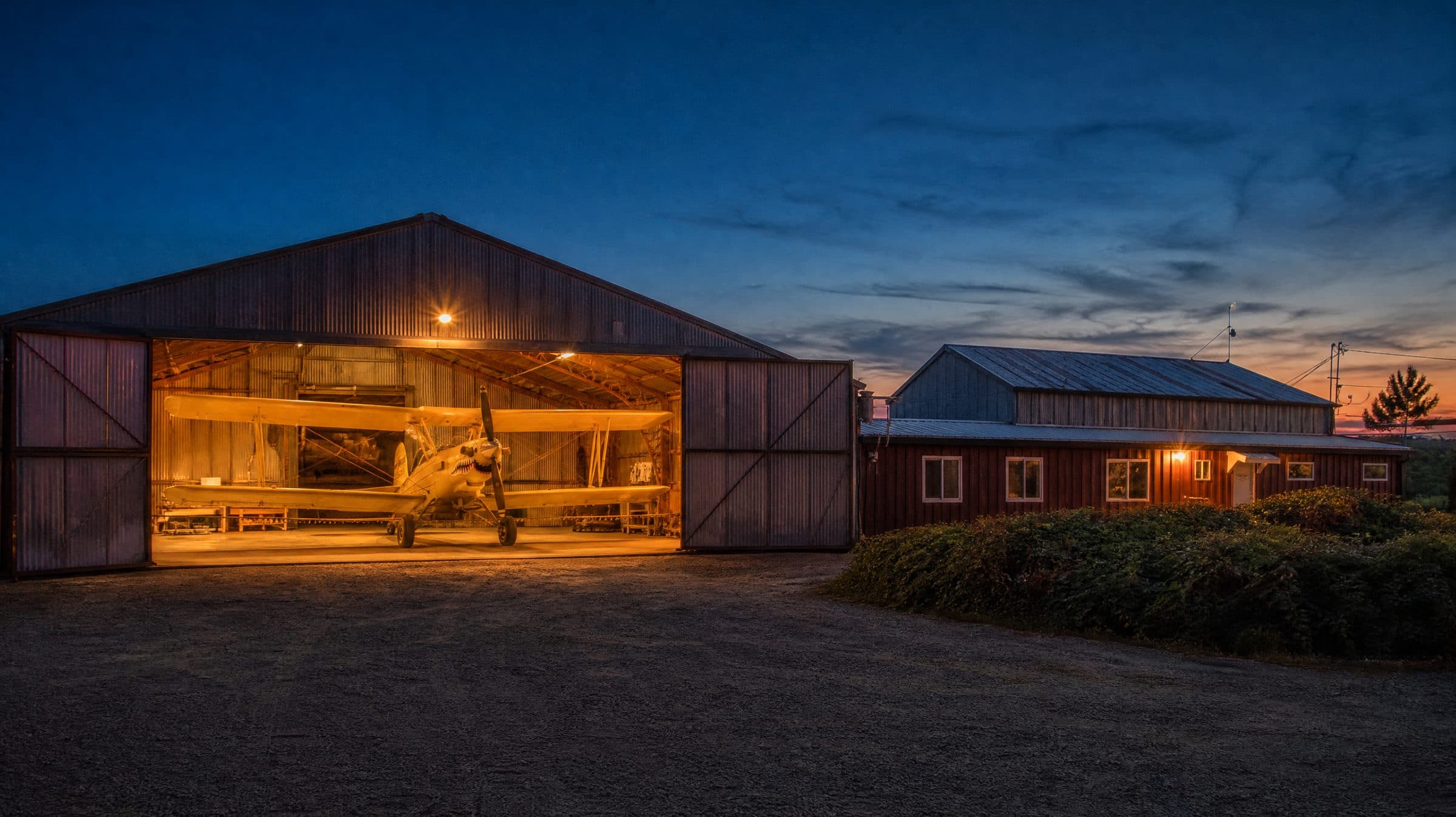
A search for a crop duster near me gives you names and phone numbers, but not the facts that decide a good job. This guide gives you 10 questions to ask before you hire an aerial applicator, and it shows you how to check each answer yourself. Aerial application (crop dusting) is a licensed, regulated job in California, so most of the answers are on public record.
How do you find a crop duster near me?
A search for aerial applicators near me works best when you start with the people who already hire them. Your pest control adviser (PCA), your neighbors and your farm supply dealer know which crop dusting companies fly in your area. When you search for crop dusting near me, favor a nearby base, because ferry distance is one factor in the price. The county agricultural commissioner's office knows which businesses have registered to work in the county.
The California Department of Pesticide Regulation (DPR) publishes lists of current licensees. You can sort the business list by name or by county. Pilot certificates appear in the lists of individuals.
Is your job a good fit for aerial application?
Check two facts before you call. First, the product label must allow aerial application. Some labels allow ground application only, and the label is the law. Your PCA checks the label before the written recommendation names an aircraft as the method.
Second, check the buffer zones on the label. A label can set a wider buffer for aircraft than for ground rigs near water, homes or sensitive crops.
Aerial application fits well when the ground is too wet for a rig, the crop is too tall or the treatment window is short. An airplane leaves no wheel tracks, no ruts and no crushed crop. Our guide to aerial spraying versus a ground rig compares the two methods.
The 10 questions at a glance
Use this checklist when you call crop dusting companies.
| # | Question | What to ask for |
|---|---|---|
| 1 | Do you hold an FAA Part 137 certificate? | A copy of the commercial certificate |
| 2 | Are you licensed by DPR and registered in my county? | The license number and the county registration |
| 3 | Who will fly my field? | The pilot's name and DPR certificate level |
| 4 | What insurance do you carry? | A certificate of insurance that includes chemical liability |
| 5 | Which aircraft will fly the job? | The aircraft type and its dry or liquid setup |
| 6 | How do you calibrate the equipment? | The date of the last pattern test |
| 7 | How do you control drift? | Wind limits and a plan for each sensitive site |
| 8 | Who files the permit and the notice of intent? | The name of the person who files each one |
| 9 | What records will I get? | A completion record with date, product, rate and acres |
| 10 | How do you price the job, and when can you fly? | A written quote and a planned date |
1. Does the company hold an FAA Part 137 certificate?
Every business that flies agricultural aircraft operations needs an agricultural aircraft operator certificate from the Federal Aviation Administration (FAA). The rule is 14 CFR Part 137, section 137.11. A company that flies for hire needs the commercial certificate. That certificate requires at least one pilot with a current commercial or airline transport pilot certificate (section 137.19).
Each aircraft must carry a copy of the operator certificate (section 137.33). Ask the company for a copy. Our guide to FAA Part 137 for agricultural aircraft has more detail.
2. Is the company licensed in California and registered in your county?
In California, any business that does pest control for hire needs a pest control business license from DPR. That rule covers every company that you find when you search for aerial spraying near me. The DPR pest control business license packet (revised July 2024) lists these duties:
- Each business location must have a qualified applicator license (QAL) holder who supervises the pest control work.
- The business must register its license with the county agricultural commissioner in each county where it works, before it does any work there.
- A business that applies pesticides by aircraft must have a person who holds a journeyman pest control aircraft pilot certificate.
Look up the company on the DPR licensee list. Then ask your county agricultural commissioner's office whether the company has registered this year. Our guide to pesticide application rules in California explains who does what.
3. Who will fly your field?
Ask for the name of the pilot who will fly your field.
California requires a DPR pest control aircraft pilot certificate at one of two levels. The DPR pilot certificate packet (revised July 2024) sets these requirements:
- Apprentice pilot. The pilot holds an FAA commercial pilot certificate and a current FAA medical certificate, and has passed the DPR exams. An apprentice flies only under the direct supervision of a journeyman pilot.
- Journeyman pilot. The pilot has held the apprentice certificate for at least one year. The pilot also has at least 150 hours of fixed-wing operation within the past two years, and has passed the journeyman exam.
Each pilot must also register with the agricultural commissioner in each county where the pilot works. If your pilot is an apprentice, ask which journeyman supervises the work.
4. What insurance does the company carry?
DPR requires each pest control business to show financial responsibility under 3 CCR section 6524, and the coverage must include chemical liability. The DPR packet lists these minimums for aerial work:
| Option | State minimum for aerial work |
|---|---|
| Liability insurance, bodily injury | $100,000 per person and $300,000 per occurrence |
| Liability insurance, property damage | $100,000 per aircraft |
| Certificate of deposit or surety bond | $50,000 per aircraft, up to $300,000 per license |
These amounts are the legal floor, not a recommendation. Ask for a current certificate of insurance, and confirm that it lists chemical liability.
5. Which aircraft will fly the job?
Ask for the aircraft type and its setup. Seed, dry fertilizer and sulfur need a dry spreader. Liquid products need a boom and nozzles.
Ask whether the aircraft uses GPS guidance and records the flight path. Our guide to crop duster planes explains the common aircraft types.
6. How does the company calibrate its equipment?
Calibration sets the equipment so that the product lands at the correct rate across the full swath (the width of one pass). In a pattern test, the airplane flies over a line of sample cards or string, and an analyst measures where the product landed.
Ask when the aircraft last had a pattern test. Also ask what swath width the pilot will use on your field.
7. How does the company control drift?
Drift is product that moves off the target field. Ask three questions. At what wind speed do you stop? How do you check for a temperature inversion? How do you plan around homes, schools, water, organic fields and bee hives?
A good answer names the limits, follows the label and includes a decision to wait when the wind is wrong. Our guide to spray drift in aerial application explains the causes. If bees forage near your field, read how aerial applicators protect pollinators.
8. Who files the permit and the notice of intent?
Three people share the paperwork: you, your PCA and the aerial applicator. Your PCA writes the recommendation for the product, the rate and the conditions. The applicator follows that recommendation and the label.
For a restricted material, the grower needs a permit from the county agricultural commissioner. For most permitted products, a notice of intent must reach the commissioner at least 24 hours before the application (3 CCR section 6434). The grower, an authorized representative or the pest control business can file it. Agree in advance on who files it and who delivers the product.
9. What records will you get after the job?
Under section 137.71, a commercial operator keeps a record of each job for at least 12 months. The record shows the customer's name and address, the date, the pilot, and the name and quantity of the material. In California, the business keeps pesticide use records for two years and reports each application to the county agricultural commissioner.
Ask what record you will receive. A useful completion record shows the field, date, time, product, rate, acres and weather conditions.
10. How is the job priced, and when can the company fly?
Price depends on the acres, the product type (dry or liquid), the application rate, the ferry distance and the field shape and obstacles. Ask for a written quote that shows any minimum charge. Compare the cost with the value of the crop that the treatment protects. Our guide to crop dusting cost per acre gives industry ranges, but only a quote for your field gives the real price.
The schedule fills fast from April to July, so call as soon as you know your window. For a pest outbreak, call right away. Our crop dusting season calendar shows when each job usually happens.
What should you have ready when you call?
Prepare these items for a fast, accurate quote:
- Find the field address, APN or FSA farm and tract number.
- Write down the crop and its growth stage.
- Estimate the acres in each field.
Caution: Do not guess the product or the rate. Use only the PCA's written recommendation and the label.
- Get the PCA's written recommendation for the product and rate.
- Mark power lines, towers, homes, water and bee hives on a field map.
- List the neighbor crops that the product must not reach.
- Choose your window: a set date or as soon as possible.
Our guide shows how to find your APN or FSA farm and tract number.
Red flags when you compare crop dusting services
Choose a different company if it shows any of these signs:
- It cannot give you a Part 137 certificate or a DPR license number.
- It has no certificate of insurance with chemical liability.
- It says that it will fly in any wind.
- It offers to choose your product or rate without a PCA recommendation.
Sutter Butte Dusters in the northern Sacramento Valley
If you search for a crop duster near me in Sutter, Yuba, Butte, Glenn or Colusa county, we are close by. Our base is 4080 Clark Rd in Live Oak. Our five Ag Cats and one Air Tractor 602 fly seeding, crop protection and fertilizer jobs. See the counties we cover on our service area page, and read about our company. To start, get a quote for your field or call (530) 695-2294, Monday to Friday, 8am to 3pm.
Questions
Yes. The company needs an FAA Part 137 agricultural aircraft operator certificate and a DPR pest control business license. It must register that license with the agricultural commissioner in each county where it works. Each pilot also needs a DPR pest control aircraft pilot certificate.
Yes. DPR publishes lists of current licensees by name and by county on its website. For county registration, call the county agricultural commissioner's office. For the FAA certificate, ask the company for a copy, because each aircraft must carry one.
Call as soon as you know your timing. In the Sacramento Valley, the schedule fills fast from April to July, so a few days of notice helps. For a pest outbreak, call right away and ask how soon the company can fly.
Your licensed pest control adviser (PCA) writes the recommendation for the product, rate and conditions. The aerial applicator follows that written recommendation and the label. For a restricted material, the grower also needs a permit from the county agricultural commissioner.
