
Rice
Rice blast: signs, risk and when to protect the heads
By the Sutter Butte Dusters team · · 6 min read
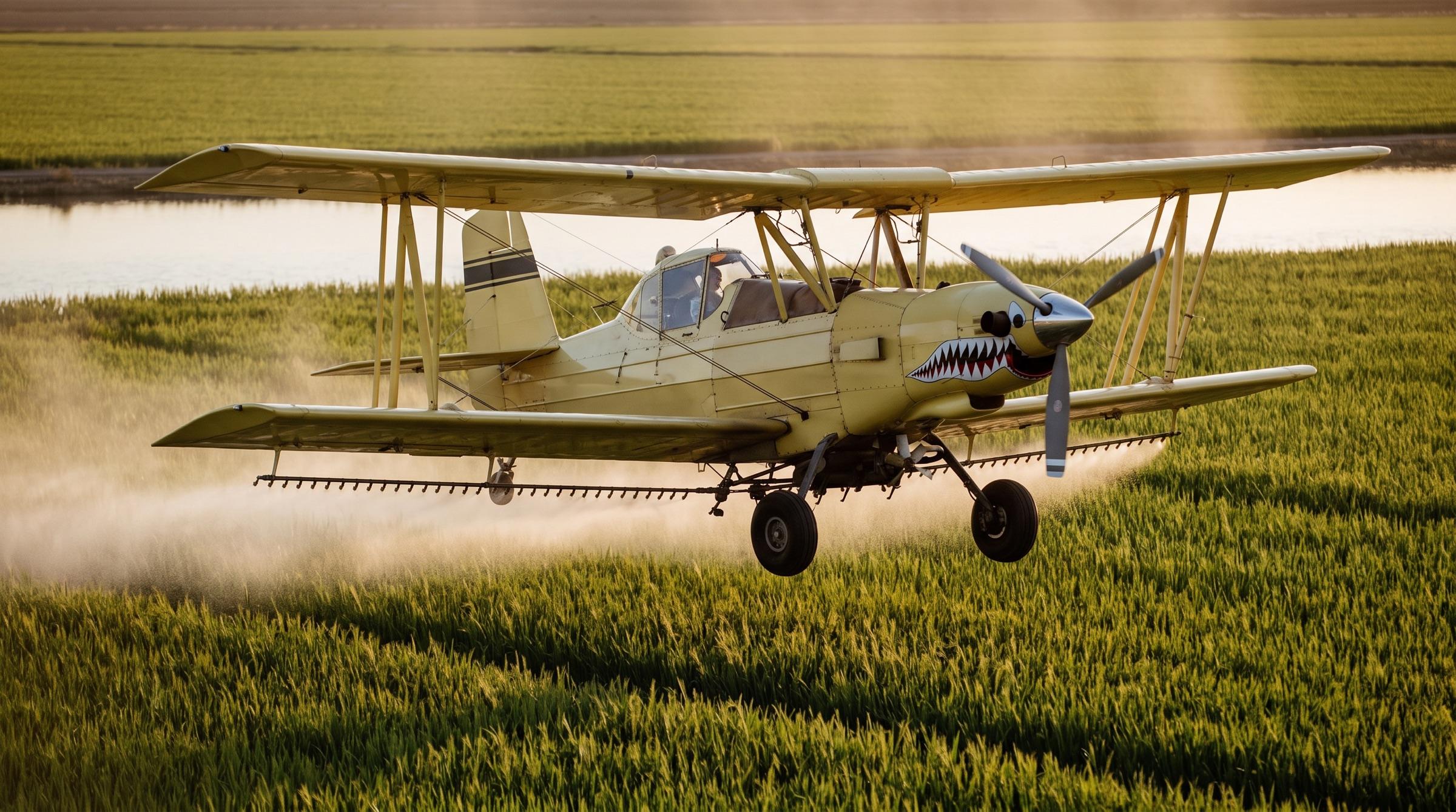
Rice blast is a fungal disease that can burn leaves and leave rice heads white and empty. It was first identified on California rice in 1996, according to the UC IPM guideline for rice blast. UC IPM is the pest management program of the University of California. This guide explains what blast looks like, what raises the risk, and when a treatment makes sense.
What is rice blast?
Rice blast comes from a fungus named Magnaporthe oryzae. The fungus lives through the winter on infected seed and on diseased crop residue. Infected seed is the most important source, and infected straw or stubble is next.
UC IPM describes California conditions as permissive but usually not conducive. In plain words, blast can happen here, but the weather usually does not favor it. A fungicide is a material that controls a fungus. UC IPM says that you need one only when unusually wet conditions occur.
What does rice blast look like?
Blast can hit the leaf, the leaf collar, the node and the neck of the plant. A lesion is a spot of diseased tissue. A panicle is the head of the rice plant that holds the grain. The neck is the part of the stem just below the panicle.
| Plant part | What you see |
|---|---|
| Leaf | Diamond-shaped lesions, 0.4 to 0.6 inch long and 0.12 to 0.2 inch wide, with a gray or white center and a brown border |
| New leaf lesion | White or gray-green center with a darker-green border |
| Leaf collar, where the blade meets the sheath | Brown rot that often kills the leaf |
| Node, near maturity | Brown or black node, and the stem above it dies |
| Neck | Rot just below the panicle. An early infection leaves the whole panicle white and blank |
| Panicle branches and hulls | Lesions that are usually brown but may be black |
Leaf blast usually peaks early in the season and declines late. It can kill young plants up to the tillering stage, when the plant makes side shoots. You often see it first on headlands, the ends of the field where fertilizer equipment overlaps and adds extra nitrogen.
White heads have other causes too. UC IPM's armyworm guideline lists armyworm feeding, stem rot, cool-temperature blanking (empty heads from cold) and rat damage. Confirm the cause before you decide. Our guide to rice pests and diseases compares the main problems.
What weather and field conditions favor rice blast?
Wet leaves and warm, still nights raise the risk. The leaf must stay wet for the fungus to infect it, from dew or another source. This table shows the numbers that UC IPM gives.
| Factor | UC IPM figure |
|---|---|
| Humidity that favors the disease | Above 90% |
| Night temperature that favors the disease | Above 68°F |
| Best temperature for infection and spore production | 77° to 82°F |
| Humidity for the most spore production | Above 93% |
| Time for one full disease cycle in good conditions | About 1 week |
| Time that one lesion may keep making spores | More than 20 days |
A spore is the tiny seed of a fungus. One lesion can make thousands of spores in one night, and little or no night wind helps the disease.
Field practice matters as much as weather. UC IPM names these risk factors:
- Too much nitrogen. High rates, especially of nitrate, make fast new growth that the fungus can infect more easily.
- Field drainage and drought stress. Drainage adds air to the soil and turns ammonium into nitrate.
- Drill seeding. The water plan for a drill-seeded field carries a higher risk.
- Shallow water. Blast may be worse in shallow parts of the field.
How do you manage rice blast without a fungicide?
Good cultural practice is the main defense. A cultural practice is a change in how you farm the field. UC IPM lists these steps:
- Use certified seed from inspected fields.
- Water-seed the field, which means you spread seed onto the flood. Keep the flood continuous.
- Avoid field drainage, especially for long periods.
- Avoid too much nitrogen, and avoid heavy nitrate applications.
- Laser-level the field for uniform water depth.
- Destroy infested residue.
Continuous flooding helps in two ways. It limits nitrate in the soil, and it limits drought stress. UC IPM says these cultural controls are acceptable in certified organic crops.
Variety choice also matters. The guideline, updated in July 2024, says M-210 is resistant to current California blast races. It says all other California varieties are susceptible. It calls M-105 and M-209 very susceptible, and it does not recommend them where blast may be severe, mostly in the northern Sacramento Valley. UC IPM advises M-210 for dry or drill seeding.
Variety advice changes as new races and new varieties appear. Ask your farm adviser or seed supplier for the current picture.
Our post on nitrogen top-dressing in rice explains how a late nitrogen application fits into the season.
How do you scout for rice blast?
Scouting has no fixed sample count in the UC IPM guideline. UC IPM says to examine plants at several field locations through the season, and to increase your checks as the plants near the boot stage. The boot stage is when the swollen sheath around the young panicle shows.
Use this list when you walk a field:
- Look for diamond-shaped lesions on the leaves.
- Look first at headlands and shallow areas.
- Note whether the lesions are making spores. Active lesions raise the risk.
- Note the variety, the nights and how long the leaves stay wet each day.
- Ask your neighbors and your adviser whether blast is in the area.
When does UC advise a rice blast treatment?
UC IPM gives a decision guide for rice blast, not a number. The goal of a treatment is to protect the panicles from neck blast. UC IPM says a treatment for leaf blast alone is generally unnecessary unless plants burn down across large areas.
| What you find | UC IPM guidance |
|---|---|
| Leaf blast, no large areas burned down | A leaf treatment is generally not needed |
| Plants burned down across large areas | A leaf treatment may be needed |
| Leaf blast in the field | A treatment at early heading may be appropriate to protect the panicles |
| No leaf symptoms, but blast in the area | An early-heading treatment may be justified, because spores travel long distances |
The decision depends on disease progress, crop stage, weather and variety. UC IPM says the risk is higher with a susceptible variety, active lesions, long daily leaf wetness and warm nights that persist.
Timing is the key part of any treatment. UC IPM says to apply the fungicide to protect the panicles as they come out of the boot. It gives the panicle blast window as mid-boot to boot-split, before the heads fully emerge. Boot-split is when the panicle starts to break through the sheath. Under heavy disease pressure, UC IPM describes a second application 7 to 14 days after the first. At that time, 60 to 90% of the panicles have emerged.
Your PCA picks the product and the rate. A PCA is a licensed pest control adviser, who writes the recommendation for your field. The label is the law, and it sets the rate, the water hold and the wait before harvest. Our post on REI and PHI explains those waits. Our rice spray guide shows where this window falls in the season.
Why does fungicide resistance matter for rice blast?
A fungus can adapt when growers use the same type of fungicide again and again. UC IPM advises that in California you make no more than one application of a high-risk fungicide group before you rotate to another group. Your PCA can plan this rotation with you. Our post on integrated pest management explains how a rotation fits a full plan.
Rice blast work from Live Oak
We fly from 4080 Clark Rd in Live Oak, with five Ag Cats and one Air Tractor 602. The blast window is short, so call early when your PCA starts to watch the boot stage. We apply the product your PCA recommends, at the label rate. Learn more about our rice work, or get a quote for your field.
Questions
The fungus Magnaporthe oryzae causes rice blast. It lives through the winter on infected seed and diseased crop residue, and infected seed is the most important source. Long leaf wetness, humidity above 90% and night temperatures above 68°F favor the disease, according to UC IPM.
UC IPM reports that rice blast was first identified on California rice in 1996. The guideline says California conditions are permissive but usually not conducive. It says growers need a fungicide only when unusually wet conditions occur.
The UC IPM guideline, updated in July 2024, says M-210 is resistant to current California blast races and all other California varieties are susceptible. It calls M-105 and M-209 very susceptible. Ask your farm adviser for current variety advice.
UC IPM says a treatment for leaf blast alone is generally unnecessary unless plants burn down across large areas. The main goal is to protect panicles from neck blast. A treatment at early heading may be appropriate if blast is in the field or the area.