Rice
Ducksalad in California rice and other broadleaf weeds
By the Sutter Butte Dusters team · · 6 min read
Ducksalad is an early-season weed of open water in California rice, and it is mostly a Sacramento Valley problem. Its seedlings stay under water, so a check can hold many plants before anyone sees them. This guide explains how to identify ducksalad, when UC says to treat it, and which other broadleaf and sedge weeds grow beside it.
What is ducksalad?
Ducksalad is the common name of Heteranthera limosa, a water plant in the pickerelweed family. The UC Statewide IPM Program (UC IPM) ducksalad page calls it an annual to perennial plant. An annual plant lives one season, and a perennial plant lives for more than one. Ducksalad reproduces mainly by seed.
The plant grows in ditches, ponds and lake edges, as well as in rice. UC IPM says that the seeds germinate only in saturated soil. Ducksalad is an early-season problem in rice, mainly in open water. Open water is the part of a check where the rice stand is thin or the canopy has not closed.
Ducksalad is a broadleaf weed. A broadleaf has wide leaves with branched veins, unlike a grass. A sedge looks like a grass, but many sedges have stems with three sides.
How do you identify ducksalad?
Ducksalad changes shape as it grows, so scout for it at each stage. UC IPM gives this description.
| Stage | What to look for |
|---|---|
| Seedling | Hairless and under water, with a rosette (a circle) of narrow, ribbonlike leaves |
| Older young plant | Some leaves float on the water |
| Mature plant | Upright, over 1-1/2 feet tall, with bright, waxy green oval leaves |
| Flowers | April through July; one showy flower on a long stalk, above the water |
| Petals | Six narrow petals in a star shape, white or bluish purple |
| Fruit | An upright capsule about 4/5 inch long |
The closest look-alike is California arrowhead. Arrowhead seedlings have narrow leaves with rectangular markings. UC IPM's California arrowhead page says those markings separate it from ducksalad. Mature arrowhead has arrow-shaped leaves and three white petals, so the two are easy to separate at that stage.
Why does a flood not stop ducksalad?
Flood water does not control ducksalad the way it controls grasses. UC IPM says broadleaf weeds and sedges are much less susceptible to drowning than grasses. They also come up earlier than grasses, and over a wider range of ages in drained fields. Uneven germination makes it harder to time a herbicide.
UC IPM gives these field conditions that favor broadleaf weeds and sedges:
- Very shallow water. Water up to 2 inches deep promotes all rice weeds.
- Draining. Some broadleaf weeds and sedges favor a drain or very shallow water.
- Uneven ground. Shallow and deep areas should differ by only 2 to 3 inches.
- Surface phosphate. Surface-applied triple superphosphate (a phosphate fertilizer) can increase ducksalad and several other weeds.
Fertilizer placement is the part many growers can change. UC IPM advises you to inject or incorporate nitrogen and phosphate 2 to 4 inches deep. It also advises against a top-dress of nitrogen or phosphorus into the water before the canopy covers the field. A top-dress is fertilizer applied onto the growing crop. Our post on rice fertilizer top-dressing explains the timing.
When does UC say to treat ducksalad?
UC IPM puts broadleaf weeds in two windows on its treatment period chart. The first runs from the 1-leaf stage of rice to tiller initiation, when the plant starts to make side shoots. The second falls in early tillering. Our guide to rice growth stages explains each stage in plain words.
Scouting decides the date inside those windows. UC IPM gives this schedule:
| Period | What to do |
|---|---|
| Flood to 21 days after the flood | Check every 3 to 4 days |
| 21 days after the flood to about 45 days after seeding | Check every week |
| Panicle initiation to heading | Record the weeds that escaped control |
At each visit, record the weed, where it grows in each basin and the rice growth stage. Panicle initiation is the start of the seed head inside the stem. Heading is the time the seed head comes out of the plant.
UC IPM's herbicide susceptibility table rates ducksalad against each rice herbicide. Your pest control adviser (PCA) is the licensed person who reads that table for your field and picks the product and the rate. The label is the law, so the product must go on at the stage, water condition and rate that the label states.
Many fields have more than one weed. UC IPM says that broad control usually takes a sequence of treatments, because timing and water needs differ among products. Tell your PCA every weed you found, and not only the worst one. Our post on herbicide application in rice covers the water condition for each type of flight.
Which other broadleaf weeds and sedges grow with ducksalad?
Ducksalad often shares a check with other weeds. The list below comes from UC IPM's rice weed names, its weed gallery and its special weed problems page.
| Weed | Type | How to know it | What UC IPM notes |
|---|---|---|---|
| Smallflower umbrella sedge (Cyperus difformis) | Sedge | 12 to 16 inches tall, three-sided stems, round seed clusters | Many populations resist group 2 herbicides, and some resist group 7 |
| Ricefield bulrush (Schoenoplectus mucronatus) | Sedge | 2 to 3 feet tall, one leaflike bract under the flower head | Flowers about 60 to 70 days after the flood; short dry periods help rice compete |
| California arrowhead (Sagittaria montevidensis) | Broadleaf | Arrow-shaped leaves, three white petals, up to about 1.5 feet tall | Common in rice fields and irrigation canals |
| Gregg arrowhead (Sagittaria longiloba) | Perennial broadleaf | Like California arrowhead, with narrower lobes | Deep plowing helps if soil and plant parts dry well |
| Winged primrose willow (Ludwigia decurrens) | Broadleaf | Up to 6 feet or taller, four yellow petals | First found in Butte County in August 2011; pieces can root in water within a day or two |
UC IPM also names redstem (Ammannia spp.) and water hyssop (Bacopa spp.) as weeds that surface phosphate can increase.
The UC IPM herbicide treatment table lists resistant populations of smallflower umbrella sedge, ricefield bulrush, California arrowhead and redstem. If you suspect resistance in one of these weeds, first rule out equipment problems, a wrong rate, poor contact with the weed and poor timing. Then ask your PCA or your UC Cooperative Extension rice adviser about a test.
UC IPM's chart gives different windows for these groups. Sedges run from the 1-leaf stage to tiller initiation. Perennial weeds run from midtillering to panicle formation.
How do you reduce ducksalad and other broadleaf weeds next season?
Use these steps with your PCA before the next flood.
- Record each weed, and mark where it grew on a field map.
- Level the field so that the flood stays even.
- Incorporate nitrogen and phosphate 2 to 4 inches deep.
- Flood the field as quickly as possible.
- Hold 4 to 5 inches of water.
- Scout on the UC schedule from the first week.
- Give your PCA your records so the program changes from year to year.
UC IPM names other useful practices. Remove rice weeds from levees and roadsides. Clean farm equipment when you move between fields. Rotate to another crop where you can, because rotation reduces the weed seed in the soil.
For severe perennial weeds, UC IPM suggests a dry fallow. It advises plowing 8 to 12 inches deep to expose the underground parts to drying. Our rice spray guide shows how broadleaf and sedge windows fit into the full rice season. For the grasses, see our guides to watergrass and sprangletop.
Ducksalad work from Live Oak
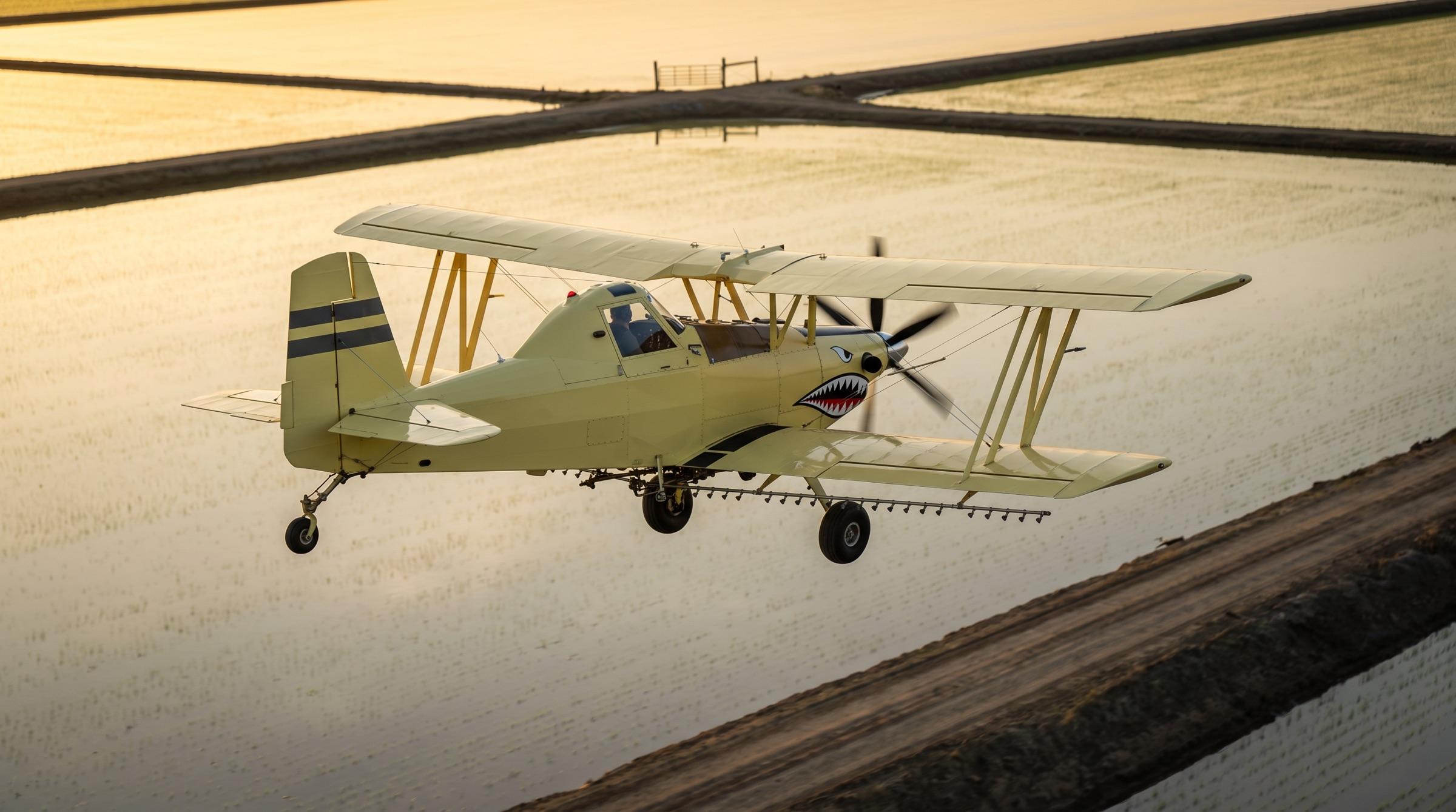
Sutter Butte Dusters flies rice herbicide jobs across Sutter, Yuba, Butte, Glenn and Colusa counties from 4080 Clark Rd in Live Oak. Our fleet has five Ag Cats and one Air Tractor 602. An airplane treats a flooded check without wheels in the water. We apply the product your PCA recommends, at the label rate, inside your treatment window. Learn more about our rice work, or get a quote for your field.
Questions
Young ducksalad is hairless and under water, with a circle of narrow, ribbonlike leaves. Older plants have floating leaves. A mature plant stands over 1-1/2 feet tall with bright, waxy, oval leaves. Each flower sits on a long stalk above the water and has six narrow white or bluish purple petals.
Mature California arrowhead has arrow-shaped leaves and three white petals. Mature ducksalad has oval leaves and six narrow petals in a star shape. Seedlings are harder to tell apart. UC IPM says rectangular markings on the leaves of young arrowhead separate it from ducksalad.
It can. UC IPM says surface-applied triple superphosphate can increase ducksalad and several other broadleaf weeds and sedges. UC IPM advises you to inject or incorporate nitrogen and phosphate 2 to 4 inches deep, and to avoid a top-dress into the water before the rice canopy covers the field.
UC IPM lists smallflower umbrella sedge and ricefield bulrush as common sedges in California rice. Smallflower umbrella sedge has three-sided stems and round seed clusters. Ricefield bulrush grows 2 to 3 feet tall. UC IPM's treatment window for sedges runs from the 1-leaf stage of rice to tiller initiation.