Ag pilot careers
Crop dusting jobs: how to become an ag pilot (and other roles)
By the Sutter Butte Dusters team · · 8 min read
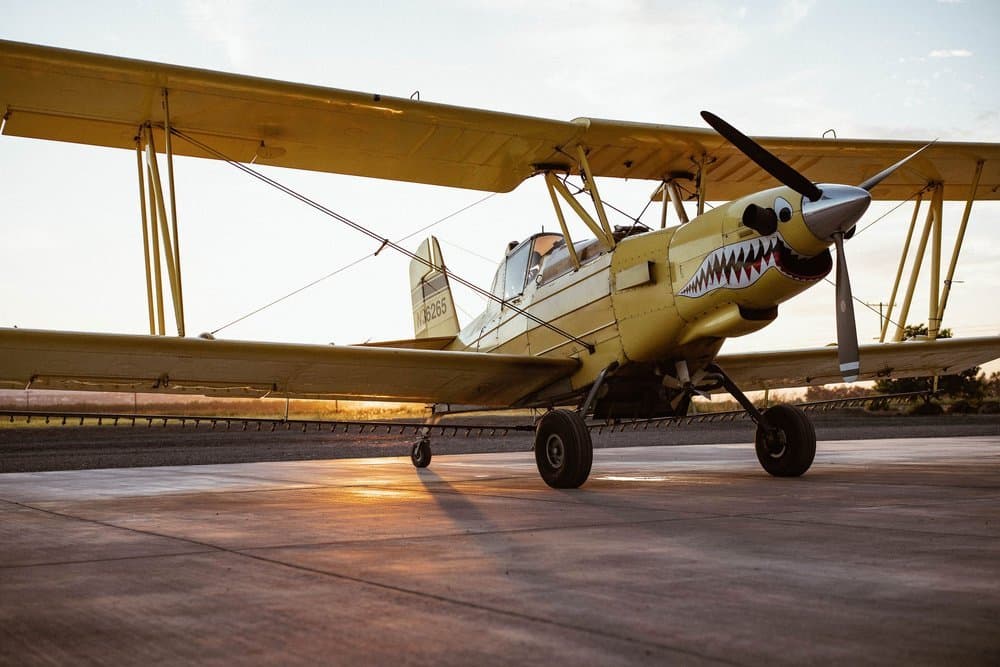
Crop dusting jobs are not only for pilots. Each ag airplane also needs a loader, a mechanic and ground crew to fly a full day. This guide explains each role, the federal and California certificates it needs, and a realistic path into the work.
What crop dusting jobs are there?
Aerial application (crop dusting) is the work of applying seed, fertilizer and crop protection products from an aircraft. The two names describe the same job. An ag operation runs on a small team, and the table shows the main roles.
| Role | What the person does | Minimum to start |
|---|---|---|
| Ag pilot | Flies the application passes over the field | FAA commercial pilot certificate, second-class medical, tailwheel endorsement and, in California, a DPR pilot certificate |
| Loader and mixer | Mixes the product and fills the hopper between flights | Age 18 or older and employer pesticide handler training before the first load |
| Aircraft mechanic | Inspects and repairs the airframe, engine and spray system | FAA mechanic certificate with airframe and powerplant (A&P) ratings |
| Ground crew | Fuels the aircraft, moves product, cleans equipment and keeps the airstrip clear | On-the-job training, plus handler training for any work with pesticides |
The pest control adviser (PCA) is not part of the flight crew. A PCA holds a separate license and writes the recommendation that tells the operator what to apply.
How big is the ag aviation workforce?
The industry is small, so each hire matters to an operator. The National Agricultural Aviation Association (NAAA) estimates 1,560 ag aviation businesses in the United States. It counts 3,385 ag pilots, and 2,028 of them work as hired pilots, not owners. These figures come from the NAAA 2019 Aerial Application Industry Survey.
The average operation in the survey had 2.17 pilots and 2.3 aircraft. Nearly 70 percent of operators flew more than 100 days in the 2017 season. In season, 35 percent of operators worked 13 to 16 hours a day.
How do you become a crop duster pilot?
If you want to know how to become a crop duster pilot, start with two sets of rules. The Federal Aviation Administration (FAA) certifies you as a pilot. In California, the Department of Pesticide Regulation (DPR) certifies you to apply pesticides from an aircraft.
Caution: Get the medical examination before you pay for flight training. A medical problem can stop a commercial career.
- Get an FAA second-class medical certificate from an aviation medical examiner.
- Earn a private pilot certificate.
- Get tailwheel training and the logbook endorsement.
- Build flight time toward the commercial certificate.
- Pass the commercial knowledge test and practical test.
- Work at least one season on the ground for an ag operator.
- Pass the DPR exams for the apprentice pilot certificate.
- Register with the agricultural commissioner in each county where you will fly.
- Fly as an apprentice under a journeyman pilot.
- Pass the journeyman exam after you meet the time and hour rules.
You must be at least 18 years old for a commercial certificate (14 CFR 61.123). Under 14 CFR 61.129, you need 250 hours of flight time, with 100 hours as pilot in command. An approved Part 142 course can lower the total to 190 hours. For commercial work, a second-class medical lasts 12 calendar months (14 CFR 61.23).
Most ag airplanes, including the Ag Cat, have a tailwheel. Under 14 CFR 61.31(i), you need logged tailwheel training and an instructor's endorsement before you fly one as pilot in command.
What does crop duster training cover?
Crop duster training teaches skills that normal flight training does not. Our post on FAA Part 137 agricultural aircraft rules explains the full rule. Under 14 CFR 137.19(e), the knowledge part covers these topics:
- The steps before work starts, including a survey of the area
- Safe handling of chemicals and disposal of used containers
- The effects of the chemicals on plants, animals and people
- Symptoms of poisoning, emergency steps and poison control centers
- The performance limits of the aircraft
- Safe flight and application procedures
The skill part covers short-field and soft-field takeoffs, approaches to the work area, flare-outs, swath runs, and pull-ups and turnarounds. The pilot flies these maneuvers at the maximum certificated takeoff weight. Under 14 CFR 137.41(c), each new pilot shows this knowledge and skill to the operator or its chief supervisor. Our post on why crop dusters fly so low shows why these skills matter.
Is there an ag pilot school?
Yes. An ag pilot school is a flight school that trains pilots in ag airplanes and application flying. The NAAA career page at agaviation.org points new pilots to ag flight schools and to scholarships such as Ag Wings of Tomorrow. NAAA also tells new pilots to get a state pesticide applicator license early.
A school does not replace work with an operator. NAAA tells new pilots to plan on a few seasons on the ground before they get a seat. Use this checklist when you compare ag pilot schools:
- Which aircraft does the school use for ag training?
- How many hours of ag flight does the course include?
- Does the course teach the Part 137 knowledge and skill topics?
- Does the school help graduates contact operators?
- What is the written total price, including fuel and housing?
What does California require of an ag pilot?
DPR requires a Pest Control Aircraft Pilot Certificate for anyone who flies an aircraft to do pest control in California. The facts below come from the DPR Pest Control Aircraft Pilot Certificate Packet (revision 7/24).
| Certificate | Main requirements |
|---|---|
| Apprentice pilot | FAA commercial certificate, current FAA medical, and 70 percent or higher on the Laws, Regulations and Basic Principles exam and the Apprentice Pilot exam |
| Journeyman pilot | At least 1 year as an apprentice, 150 hours of fixed-wing operation in the past 2 years, a signed supervision statement, and 70 percent or higher on the Journeyman exam |
The packet lists a $135 application fee and a $115 fee for each exam. An apprentice works only under the direct supervision of a journeyman pilot. Each pilot completes 20 hours of approved continuing education every 2 years. For the wider state rules, read our guide to pesticide application rules in California.
How many flight hours do ag pilot jobs need?
The legal minimum is the commercial certificate, which usually means 250 hours. Most ag pilot jobs ask for more, and each operator sets its own standard. For context, hired pilots in the NAAA survey averaged 7,450 hours of ag flight time. New pilots often start on simple, open fields and move to larger turbine aircraft later. Our post on the Air Tractor 602 and the Ag Cat compares the two types we fly.
What do loaders and mixers do?
Between flights, the loader mixes the product, fills the hopper, closes and checks the lid, and cleans up any spill. A fast, careful loader helps the pilot fly more loads in a day.
Warning: Read the pesticide label before you handle the product. The label sets the protective equipment you must wear.
California rules for handlers are strict:
- A person who handles pesticides for commercial crop production must be at least 18 years old (3 CCR 6724).
- The employer trains each handler before the first contact with a pesticide, then at least once a year (3 CCR 6724).
- Some liquid products with skin-toxicity warnings must go through a closed mixing system (3 CCR 6746).
- The employer posts the name, address and phone number of a nearby emergency medical facility (3 CCR 6726).
What other ground crew jobs are there?
Ground crew keep the strip safe and the fleet ready. Typical tasks include these:
- Fuel the aircraft and check the fuel for water.
- Wash the aircraft, the loading equipment and the mix area.
- Change out of contaminated clothes after a wash job.
- Keep people, vehicles and animals clear of the runway.
- Record each load for the job records.
Few operators still use human flaggers to mark each swath at the field edge. In the NAAA survey, 99 percent of operators used GPS for swath guidance. The pilot now follows lines on a screen.
What do ag aircraft mechanics need?
An ag mechanic needs an FAA mechanic certificate with airframe and powerplant ratings. Under 14 CFR 65.77, you can finish a certificated aviation maintenance technician school. You can also show 30 months of practical experience on both airframes and powerplants. Ag aircraft make many short flights each day and carry corrosive products, so they need frequent inspection.
Do crop duster jobs pay well?
Pay depends on the role, the season, the acres flown and the pay structure. The Bureau of Labor Statistics (BLS) gives a median annual wage of $123,220 for all commercial pilots in May 2025. Many ag pilots earn a share of what the operator bills, so their pay changes with the acres they fly. Our post on crop duster pilot salary gives ag-specific numbers.
Ground jobs pay less, and most of the work is seasonal. In the northern Sacramento Valley, most flying happens from March to September. Our crop dusting season calendar shows when each job happens.
Is the job outlook good for ag pilots?
Some older articles say that aerial application replaced crop dusting. That is not correct, because the two names describe the same work. The BLS Occupational Outlook Handbook projects 5 percent growth for commercial pilots from 2025 to 2035.
How do you apply for crop dusting jobs?
Contact operators in the winter, before the spring rush starts. Use these steps:
- Find the ag operators in your area through NAAA or your state ag aviation association.
- Write a short note that names the role you want.
- Attach a résumé with your certificates, ratings and flight hours.
- Offer to work on the ground for your first season.
- Call the operator during office hours to follow up.
Crop dusting jobs at Sutter Butte Dusters
We fly five Ag Cats and one Air Tractor 602 from our airstrip at 4080 Clark Rd in Live Oak. Our work covers rice, orchards and row crops in Sutter, Yuba, Butte, Glenn and Colusa counties. Each season the fleet needs people in the air and on the ground. To ask about open roles, visit our careers page.
Questions
Plan on several years. You need 250 hours for an FAA commercial certificate, then a season or more of ground work. In California, you must also fly at least 1 year as an apprentice and log 150 fixed-wing hours before you can become a journeyman pilot.
No FAA or California DPR rule requires a college degree to fly as an ag pilot. You need the pilot certificates, a current medical certificate and the DPR exams. Operators look for flight hours, tailwheel time and a record of reliable work on the ground.
Yes. Loader, mixer and ground crew jobs need no pilot certificate. In California, the employer trains you before you handle pesticides and repeats the training each year. A person who handles pesticides for crop production must be at least 18 years old.
No standard price exists, because costs vary by school, aircraft and course length. Ask each ag pilot school for a written total price that includes fuel and housing. Also compare the hours of ag flight in the course and whether the school helps graduates contact operators.